
The Step-by-Step Guide to Virtual Staging for Real Estate Investors & Flippers
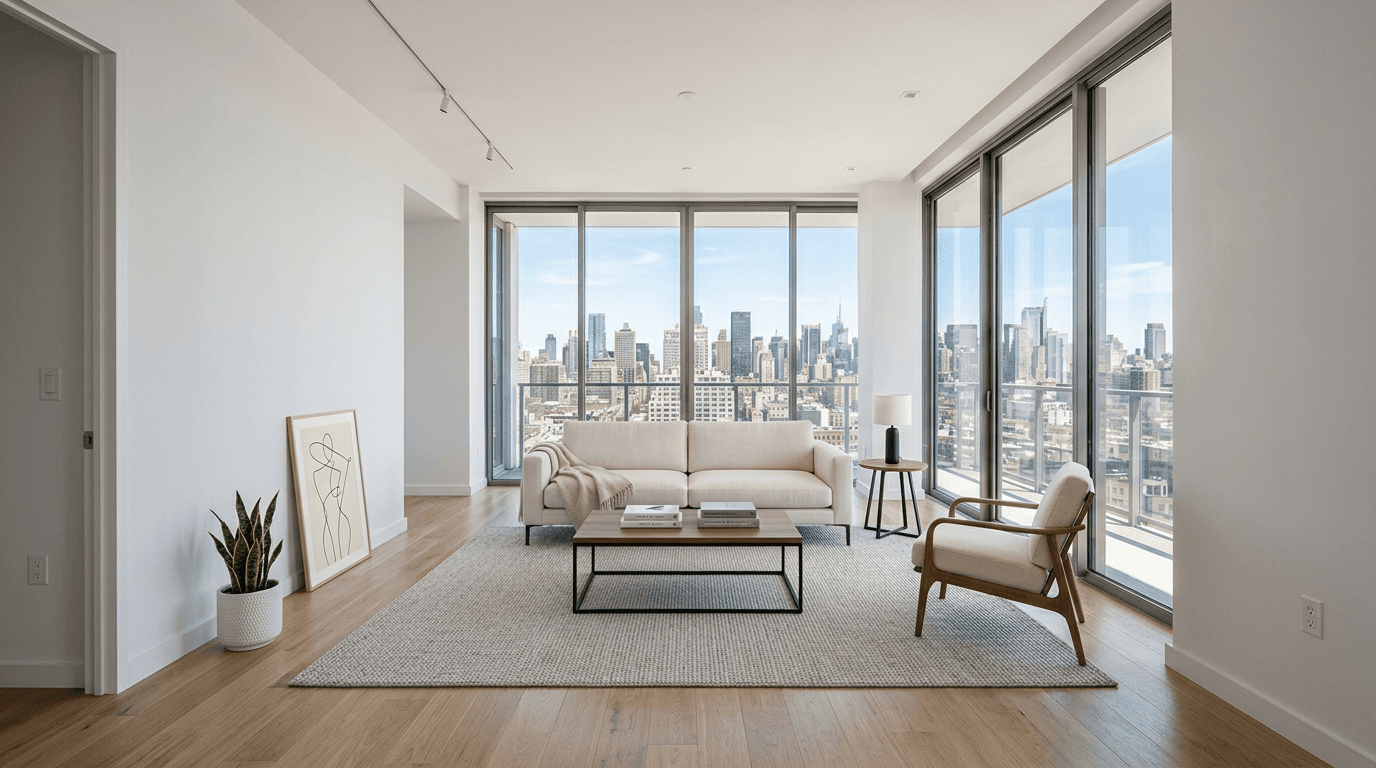
For real estate investors and flippers, every extra day on market quietly drains profit through interest, taxes, insurance, utilities, lawn care, cleaning, and the opportunity cost of trapped capital. In 2026, buyers still make fast emotional judgments online, and a beautifully renovated but completely empty property often underperforms because vacant rooms photograph smaller, feel colder, and force buyers to do the hardest work themselves: imagine how the home actually lives. That gap between a strong rehab and weak presentation is where virtual staging becomes a serious profit-protection tool, not a cosmetic afterthought. Used correctly, it helps investors position finished projects more competitively, tell a clear lifestyle story, showcase scale, and move properties faster without the cost and logistics of physical staging. This guide is built specifically for fix-and-flip investors, wholesalers marketing vacant inventory, and rehabbers who need practical, repeatable results. You will learn how to decide when virtual staging makes financial sense, how to prepare listing photos for the best outcome, how to stage for your actual buyer profile instead of your personal taste, how to remain compliant and credible, and how to turn staged images into a marketing asset that supports faster showings and stronger offers.
According to recent staging metrics by the National Association of Realtors (NAR), professionally staged properties can significantly increase sales speed and perceived value, accelerating the impact for your specific niche.
Step 1: Decide when virtual staging makes financial sense for the deal
The biggest mistake investors make with virtual staging is treating it like a universal add-on instead of a deal-specific marketing decision tied directly to holding costs and buyer psychology. Before ordering anything, evaluate the property the way an operator would: by calculating where visual presentation is likely to accelerate time to offer and protect margin. A recently renovated but vacant flip is often the strongest candidate because empty rooms can make even a clean, modern house feel unfinished online, especially in living rooms, primary bedrooms, dining spaces, lofts, and awkward secondary rooms where buyers struggle to understand scale. If your target buyer is a retail owner-occupant, virtual staging usually delivers the most value because that audience is purchasing both function and aspiration. By contrast, if you are selling a heavy fixer to another investor, the added benefit may be limited unless the property has already been cleaned out and you need to clarify layout. Think in terms of economics: if professional virtual staging for key rooms costs a small fraction of one month of carrying costs, then even a modest reduction in days on market can create an outsized return. Also consider your market segment. In competitive suburban resale markets, staged visuals help emotionally anchor the buyer; in urban condos or townhomes with compact rooms, they solve the recurring problem of spaces looking smaller than they truly are. The goal is not to decorate for decoration’s sake but to remove buyer hesitation, clarify the use of each room, and make your photos perform harder on listing portals and social media. When virtual staging is approached as a margin-preservation strategy rather than an aesthetic upgrade, it becomes much easier to decide where it belongs in your listing budget.
Action Step
Calculate one month of holding costs for your current property and compare that number to the projected cost of virtually staging 4 to 6 key photos.
Step 2: Capture the right photos so the virtual staging looks believable and high-converting
Virtual staging is only as effective as the original photography, which means the quality of your input images determines whether the final result looks premium, trustworthy, and persuasive or artificial, distorted, and easy for buyers to dismiss. Investors often spend heavily on renovation details and then undermine the listing by using rushed phone photos, poor lighting, crooked framing, or images taken before the property is truly ready. To get results, photograph only after the rehab is complete, the property is deep cleaned, touch-up paint is finished, floors are spotless, lights are working, landscaping is presentable, and every distracting construction remnant has been removed. The camera should capture wide, level, high-resolution images that show corners, windows, flooring, and enough wall space for realistic furniture placement. Prioritize the rooms where staging solves an interpretation problem: the main living area, dining area, primary bedroom, secondary bedroom or office, and any bonus room that might otherwise confuse buyers. Avoid trying to stage photos with obvious defects, unfinished trim, missing outlet covers, exposed cords, damaged walls, or severe lens distortion, because polished furniture added to an imperfect room can make the property feel manipulated rather than market-ready. It is also important to shoot from angles that help buyers understand flow between spaces, particularly in open-concept flips where the kitchen, dining, and living room work as a combined visual sales argument. Good virtual staging should feel like a plausible version of the home, not a fantasy rendering. That requires clean lines, natural light, accurate room proportions, and photographs taken with enough discipline that the staged furniture appears grounded in reality. In practical terms, this means treating photography as part of your disposition strategy, not as the final errand after construction wraps up.
Action Step
Schedule final listing photos only after the rehab punch list, deep cleaning, and curb appeal work are fully complete, and identify 5 rooms that most need scale and function clarification.
Step 3: Stage for the likely buyer profile and neighborhood price point, not your personal taste
The most profitable virtual staging choices come from alignment, not creativity alone. Investors frequently lose effectiveness by selecting furniture styles they personally like, overdesigning modest homes, or using luxury aesthetics that conflict with the neighborhood, price band, or buyer expectations. The purpose of virtual staging is to help the probable buyer see themselves in the home quickly and comfortably, which requires a deliberate merchandising mindset. Start with the end buyer. If the property is a starter home in a middle-income suburban neighborhood, aim for clean, current, approachable interiors with neutral furnishings, practical layouts, and enough warmth to make the space feel livable without looking expensive or fragile. If the flip is a higher-end renovation in an affluent area, the staging can become more elevated and editorial, but it still needs to remain believable for the square footage and architectural style. For wholesalers marketing a cleaned-out but habitable property to retail-minded buyers or agents, focus on utility and room purpose over trend. This is especially critical in secondary rooms that buyers often misread, such as a small bedroom, den, breakfast nook, or finished basement. The right staged design answers silent questions before they become objections: Does a queen bed fit? Can this room function as a home office? Is there space for a dining table? Does this narrow living room still accommodate seating? By solving those questions visually, you reduce friction and increase confidence. Style consistency matters too. A modern kitchen paired with farmhouse staging, or a traditional exterior paired with ultra-minimal interiors, can subtly weaken the presentation. The strongest investor listings feel intentional from exterior to interior and from room to room. Your staging should support the renovation story you are already telling through finishes, paint colors, flooring, lighting, and neighborhood comps, creating a coherent image package that helps buyers perceive value faster.
Action Step
Define your target end buyer, neighborhood price band, and design style for the property before approving any virtual staging concepts.
Step 4: Use virtual staging ethically and strategically in the listing so it builds trust instead of skepticism
Virtual staging works best when it increases clarity without creating confusion, and in 2026 that means investors must be especially disciplined about disclosure, realism, and photo selection. Buyers are more visually sophisticated than ever, and agents immediately notice when a listing crosses the line from helpful enhancement into misrepresentation. The safest and most effective approach is to use virtual staging to illustrate furnished potential while keeping the room’s actual structure, finishes, dimensions, windows, and fixtures accurately represented. Do not alter permanent features, hide damage, add amenities that do not exist, or stage around problems that a buyer will discover at the showing. If a room is small, the furniture should be scaled appropriately rather than minimized to create a false impression of spaciousness. If the property has an unusual layout, the staging should help explain it, not disguise it. Best practice is to disclose clearly in the listing that certain images have been virtually staged and, where appropriate, include both staged and unstaged versions so buyers can evaluate the finished rehab honestly. This increases credibility while still giving your marketing the emotional lift it needs. Strategic sequencing also matters. Lead with your most compelling staged hero images to win the click and secure attention on the portal, but support them with strong unstaged photos that confirm the renovation quality and room reality. Think of staged photos as interpretation tools: they should answer how the home lives, not rewrite what the home is. For investors whose reputation drives repeat agent relationships and referral business, this point is especially important. A fast sale gained through buyer disappointment is not an operational win. Ethical virtual staging, by contrast, can help generate stronger showings, fewer surprises, and better alignment between online expectations and in-person experience, which often translates into smoother negotiations and fewer trust-related objections.
Action Step
Review every staged image for realism and add a clear virtual staging disclosure to your listing materials before the property goes live.
Step 5: Turn virtually staged images into a full marketing system that shortens time on market
The highest return on virtual staging does not come merely from uploading a few improved listing photos; it comes from integrating those images into a coordinated marketing system designed to generate attention quickly during the critical first days on market. For investors, this is where presentation turns into velocity. Once your staged photos are complete, use them across every buyer touchpoint: MLS, major real estate portals, brokerage websites, email campaigns to local agents, social media ads, property flyers, single-property websites, and text outreach where appropriate. Your hero image should showcase the room most likely to create an emotional response, usually the main living area or an open-concept great room, because that is often where vacant homes underperform the most. Follow with supporting staged images that solve specific buyer questions about function and scale, then reinforce those with unstaged photos that validate finish quality and condition. Pair the visuals with listing copy that translates the imagery into value, emphasizing move-in-ready renovation, versatile room use, and efficient layout rather than vague adjectives. If the property had a prolonged listing history before rehab, the upgraded and staged relaunch should be positioned as a fresh market introduction, not just another repost. Investors should also monitor metrics aggressively: click-through rates from social ads, saves and shares on listing portals, showing volume in the first week, agent feedback about room perception, and whether buyers mention the staged images during tours. This feedback loop helps you refine future projects and identify which room types produce the strongest return. In a business where profit is won or lost in acquisition, construction discipline, and disposition speed, virtual staging should be treated as a repeatable disposition lever. When the images are deployed intentionally, they help your listing stand out, improve buyer comprehension before the showing, and compress the timeline between project completion and capital recovery.
Action Step
Build a launch plan that uses your staged images on the MLS, portals, email outreach, and social campaigns within the first 72 hours of going live.
Explore More Resources
Conclusion
For real estate investors and flippers, virtual staging is most effective when it is used as a profit-minded marketing tool rather than a decorative extra. It helps vacant, renovated homes feel larger, warmer, and easier to understand, which directly addresses three of the biggest investor pain points: costly days on market, the pressure to sell quickly after rehab, and buyer hesitation caused by empty rooms that photograph poorly. By evaluating the economics of each deal, capturing high-quality photos, matching the staging to the actual buyer profile, maintaining full credibility through honest disclosure, and deploying the finished images across a coordinated marketing plan, you can turn virtual staging into a repeatable system that supports faster showings, stronger buyer engagement, and more efficient exits. In 2026, where online presentation heavily influences in-person demand, the investors who win are the ones who pair good renovations with equally disciplined visual merchandising.
Ready to Stage Your First Room?
Join thousands of top real estate professionals who use AI Virtual Staging to instantly transform vacant photos into fully-furnished masterpieces in under 20 seconds.
Start Staging For FreeFrequently Asked Questions
Is virtual staging worth it for a flip if the rehab already looks great empty?
Usually, yes, especially when the property is fully vacant. Even a strong rehab can feel cold, smaller, or less intuitive in listing photos without furniture. Virtual staging helps buyers understand scale, placement, and lifestyle, which can increase clicks, showings, and urgency. For many investors, the cost is tiny compared with one extra month of carrying costs.
How many rooms should an investor virtually stage?
Most flippers get the best return by staging the 4 to 6 rooms that most influence buyer perception, typically the living room, dining area, primary bedroom, one secondary bedroom or office, and a bonus room if the layout needs explanation. You do not need to stage every room to create a strong effect.
Can virtual staging be used for wholesale listings?
Yes, but the use case is different. For wholesalers, virtual staging is most helpful when the property is vacant, cleaned out, and suitable for a retail-minded buyer or agent who needs help understanding the layout. It is less useful for distressed investor-only opportunities where condition, not presentation, is the main decision driver.
Do I need to disclose that listing photos are virtually staged?
Yes. Clear disclosure is the best practice and helps protect trust with buyers and agents. Virtual staging should illustrate how a room can be furnished, not misrepresent the property’s condition, dimensions, or permanent features. Including both staged and unstaged photos is often the most credible approach.
What style of virtual staging works best for flips?
The best style is the one that matches the probable buyer, the home’s architecture, and the neighborhood price point. In most cases, clean, neutral, modern-contemporary furnishings perform well because they feel current and broadly appealing. The goal is not to impress with trendiness but to make the home feel functional, spacious, and move-in ready.
Explore More Guides
Continue building your real estate expertise.
The Step-by-Step Guide to Virtual Staging for Urban Live-Near-Transit Condo Marketers
An authoritative 2026 step-by-step guide for condo developers and broker teams on using virtual staging to market live-near-transit condos, elevate compact units, differentiate urban inventory, and sell a premium car-lite lifestyle.
The Step-by-Step Guide to Virtual Staging for Infill Bungalow Court Developers
An authoritative step-by-step guide for infill bungalow court developers on using virtual staging to educate buyers, showcase compact homes, and position communal courtyards as premium lifestyle amenities in 2026.
The Step-by-Step Guide to Virtual Staging for Forensic Stigma Property Repositioning Brokerages
An authoritative 2026 step-by-step guide for brokerages using virtual staging to reposition forensic stigma properties, reduce buyer hesitation, rebuild emotional appeal, and market homes impacted by crime, suicide, biohazard history, or severe negative perception.
The Step-by-Step Guide to Virtual Staging for Estate Sale Realtors for Heir-Occupied Homes
An authoritative 2026 step-by-step guide for estate sale realtors using virtual staging to market heir-occupied inherited homes filled with furniture, personal items, and decades of clutter. Learn how to prepare photos, manage family expectations, choose the right rooms, use compliant listing language, and help buyers see value without requiring costly physical staging.
The Step-by-Step Guide to Virtual Staging for Small-Format Boutique Apartment Developers
An authoritative step-by-step guide for small-format boutique apartment developers on using virtual staging to accelerate lease-up, elevate perceived value, and market compact units effectively in 2026 without institutional-level budgets.
The Step-by-Step Guide to Virtual Staging for Residential Treatment Campus Marketing Teams
An authoritative 2026 step-by-step guide for residential treatment campus marketing teams on using virtual staging to present behavioral health, recovery, and therapeutic environments with warmth, credibility, and sensitivity.