
The Step-by-Step Guide to Virtual Staging for Married Student Housing Operators
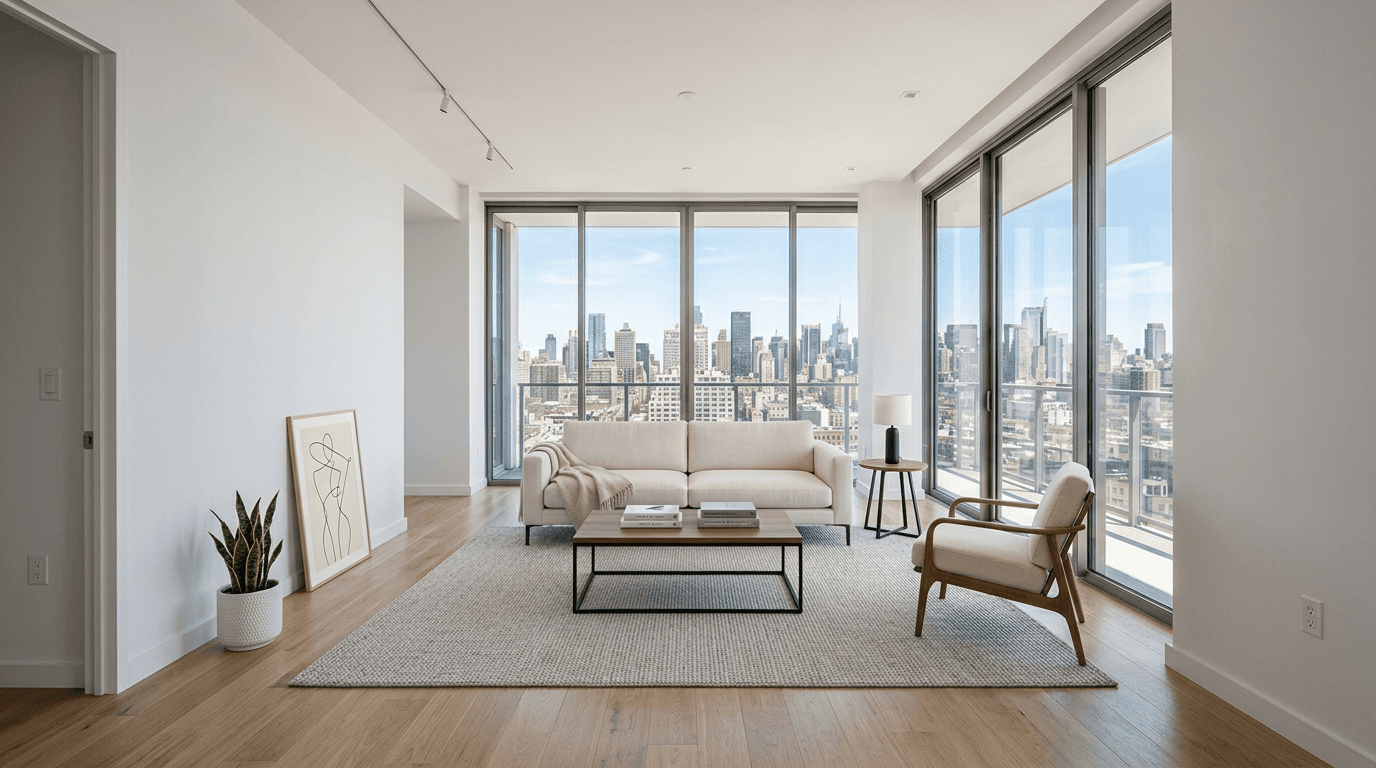
Virtual staging is no longer a cosmetic marketing extra for married student housing operators; in 2026, it is a strategic leasing tool that directly shapes how graduate students, spouses, and student families interpret livability, safety, function, and value. Operators serving this niche face a uniquely difficult positioning challenge: standard student housing photography often signals transience, youth, and roommate culture, while your actual demand base is looking for stability, privacy, study-friendly layouts, child-conscious functionality, and a home environment that can support both academic pressure and family life. When units are photographed empty or staged like conventional off-campus student apartments, prospects struggle to visualize where a crib fits, how a dining nook supports shared meals and study sessions, or whether the living room can accommodate both quiet evenings and toddler movement. The result is avoidable friction in the leasing journey, weaker emotional connection, and unnecessary vacancy drag. A well-executed virtual staging strategy solves this by translating raw square footage into credible family-oriented use cases, helping prospects immediately understand practicality and comfort without misleading them about the unit itself. This guide provides a step-by-step framework for married student housing operators who want to use virtual staging with precision, authenticity, and measurable leasing intent.
According to recent staging metrics by the National Association of Realtors (NAR), professionally staged properties can significantly increase sales speed and perceived value, accelerating the impact for your specific niche.
Step 1: Define the exact household profiles your virtual staging must speak to
Before you stage a single image, you need to decide exactly which household realities your marketing is meant to reflect, because married student housing is not one monolithic renter category. Some prospects are newly married graduate students with minimal furniture and no children, some are doctoral candidates with spouses who work remotely, some are international families trying to interpret U.S. apartment layouts from abroad, and others are student parents who care less about aesthetics and more about movement, storage, safety, and daily routine. Virtual staging becomes powerful only when it is rooted in these operational truths rather than generic assumptions. Start by mapping your most common leasing personas according to household size, life stage, academic schedule, and practical needs inside the unit. A one-bedroom apartment marketed to a couple without children should not be staged identically to a one-bedroom that frequently leases to a couple with an infant, and a two-bedroom serving a family with one child should communicate flexibility in entirely different ways than a two-bedroom intended for a graduate student couple who need a nursery, guest room, or office. The point is not to stereotype residents, but to visually answer the real questions they ask themselves in seconds when viewing photos: Can we eat here comfortably, can one of us work while the other studies, is there room for a child’s belongings, and does this feel calm rather than cramped? Operators who skip this profiling stage often end up with polished but ineffective images that look attractive without being persuasive. By contrast, when your staging concept is aligned to your actual applicant mix, every room can communicate purpose, proportion, and lifestyle fit in a way that reduces uncertainty and increases qualified inquiry quality.
Action Step
Create 3 to 4 resident personas based on your recent leases and assign each floor plan a primary household profile before ordering any virtual staging.
Step 2: Stage for functional family living, not just visual appeal
The most successful virtual staging for married student housing does not merely make a room look fuller; it demonstrates how the apartment works for real academic and family life. Operators often make the mistake of choosing trendy furniture packages that photograph well but fail to answer the practical concerns of graduate student households. A beautifully styled room with oversized accent chairs, decorative pieces that imply luxury without utility, or layouts that ignore circulation can actually reduce trust, because your audience is evaluating whether the unit can support daily routines under real constraints. Instead, every staged image should communicate function first and style second. Living rooms should show seating that suggests conversation, reading, and child supervision, while preserving believable pathways and scale. Dining areas should feel usable for both meals and laptop work, especially since many student families rely on flexible spaces rather than separate offices. Bedrooms should convey calm, rest, and realistic storage potential, and second bedrooms should be staged according to the demand profile you identified, such as a nursery, child room, or compact office-guest hybrid. Kitchens and breakfast nooks should be staged to emphasize practicality and livability rather than overdesign. The strongest family-oriented virtual staging also subtly communicates emotional reassurance: soft but not extravagant decor, clear surfaces, durable-looking furnishings, and arrangements that make the space feel organized, quiet, and manageable. This matters because married students and student families are not simply shopping for aesthetics; they are searching for a residence that can help them sustain a demanding season of life. If your images help them imagine routines rather than just rooms, you create a far more persuasive leasing narrative than generic student housing photography ever could.
Action Step
Review each room in your most important floor plans and define the daily function that the staged image must communicate before selecting furniture or decor.
Step 3: Use realistic layouts and visual honesty to build trust with prospects
Virtual staging only improves leasing performance when it is credible, and credibility is especially important for married student housing operators because your audience tends to be highly practical, time-constrained, and often relocating under pressure. Prospects evaluating university-adjacent family housing are not looking for marketing fantasy; they are trying to make one of the most consequential logistical decisions of their academic year. That means your staged images must remain firmly anchored in the true dimensions, architectural features, and limitations of the unit. Furniture should be scaled appropriately, walkways should remain realistic, windows and closets should not be obscured in ways that distort perceived usability, and family-oriented scenes should never imply amenities or square footage the apartment does not actually provide. A common error is overfilling a space to make it feel “complete,” only to create subconscious doubt because the room appears less livable upon closer inspection. Another is staging with an aspirational suburban family aesthetic that clashes with the realities of compact campus-adjacent housing. The goal is not to pretend the unit is larger or more luxurious than it is, but to prove that the space can be well used with thoughtful arrangement. This distinction is critical for reducing disappointment during tours and preserving conversion rates from online lead to signed lease. In 2026, renters are increasingly savvy about digitally enhanced media, and operators who use virtual staging responsibly stand out by pairing polished imagery with transparent expectations. The best practice is to show the apartment’s actual bones clearly, use furniture that fits the floor plan’s scale, and include varied staged scenarios across your website and leasing materials that help different household types understand fit without feeling misled. Trust is a leasing asset, and visually honest staging protects it.
Action Step
Set staging rules for your team or vendor that require accurate furniture scale, unobstructed architectural features, and zero visual exaggeration of the unit’s actual size or amenities.
Step 4: Integrate virtual staging into your full leasing funnel, not just listing photos
Many operators underuse virtual staging by treating it as a one-time enhancement for property listing photos, when in reality its greatest value comes from being embedded throughout the leasing funnel. For married student housing, where prospects may be comparing options remotely, coordinating moves around academic calendars, or making decisions with a spouse from another city or country, every touchpoint needs to reinforce the same clear message: this community understands family-oriented student life and offers practical, comfortable housing designed to support it. That means your staged images should appear strategically across your website, floor plan pages, ILS listings where allowed, email nurturing campaigns, digital brochures, social media campaigns, leasing office presentations, and even follow-up communications after tours. A prospect who clicks from a search result to your one-bedroom floor plan should immediately see not just an empty shell, but a believable visualization of how a couple or small family might use the space. A lead who inquires from abroad should receive staged visuals that make room purpose and layout easier to understand without requiring an in-person visit. A touring prospect should see consistency between online visuals and the explanatory narrative used by your leasing staff. This kind of integrated use turns virtual staging from decoration into messaging infrastructure. It also allows you to tailor visuals by demand segment, highlighting study-space flexibility, family dining functionality, nursery potential, or calm bedroom layouts depending on the audience source. When staging is distributed intentionally across the funnel, it improves not just click-through and first impressions, but comprehension, confidence, and decision speed. In a niche where prospects are balancing budget, campus proximity, family logistics, and academic obligations all at once, the operator who communicates clearly and repeatedly with relevant visuals gains a meaningful leasing advantage.
Action Step
Map every major prospect touchpoint in your leasing funnel and assign the most relevant virtually staged image set to each one for consistent family-oriented messaging.
Step 5: Measure performance and refine staging based on leasing outcomes
An authoritative virtual staging strategy for married student housing should never end at image delivery; it should be managed as an ongoing performance system tied to leasing outcomes, lead quality, and market response. Too many operators assume that if staged images look professional, they are working, but aesthetic polish alone does not prove that your visuals are attracting the right households or reducing friction in the decision process. In 2026, operators have enough marketing and CRM data to evaluate virtual staging with far more discipline. Begin by identifying the metrics that matter most for your portfolio: click-through rates on listings, time on floor plan pages, inquiry-to-tour conversion, tour-to-application conversion, application quality, and vacancy days by unit type. Then compare the performance of virtually staged assets against empty-unit imagery and against different staging concepts for the same floor plan. You may find, for example, that a two-bedroom staged as a parent bedroom plus nursery outperforms a parent bedroom plus office near certain universities, while the reverse may be true in markets with more dual-graduate households and fewer children. You may also learn that prospects respond better to understated, functional styling than to elevated designer aesthetics. Leasing teams should be included in this feedback loop, because they hear firsthand which images resonate, which create confusion, and which prompt the most useful questions. Over time, this lets you refine not only how rooms are staged, but how communities are positioned. The strongest operators treat virtual staging as a demand-matching tool that evolves with enrollment patterns, resident demographics, and leasing cycle timing. When you consistently test, learn, and adapt, your imagery becomes more than attractive marketing; it becomes a reliable instrument for aligning presentation with actual renter needs and improving occupancy performance.
Action Step
Track staged-image performance by floor plan and persona, then review leasing data and team feedback quarterly to update your visual strategy based on real results.
Explore More Resources
Conclusion
For married student housing operators, virtual staging is most effective when it is built on resident reality, designed around daily family function, executed with visual honesty, deployed across the full leasing journey, and improved through measurable performance analysis. In a market where generic student housing imagery often fails to reflect the needs of graduate students, spouses, and student families, thoughtful virtual staging helps operators translate empty space into understandable, trustworthy, and emotionally resonant housing solutions. When prospects can instantly see how a unit supports studying, resting, dining, parenting, and shared routines, they are more likely to view the property as a practical home rather than just another apartment near campus. Used strategically, virtual staging does more than make listings look better; it clarifies fit, strengthens trust, and supports stronger leasing outcomes in a highly specific and underserved housing niche.
Ready to Stage Your First Room?
Join thousands of top real estate professionals who use AI Virtual Staging to instantly transform vacant photos into fully-furnished masterpieces in under 20 seconds.
Start Staging For FreeFrequently Asked Questions
How is virtual staging for married student housing different from standard student housing staging?
Standard student housing staging often emphasizes roommate living, youthful decor, and social layouts, whereas married student housing staging must reflect privacy, stability, comfort, and practical family use. The visuals should help prospects imagine shared routines such as studying, dining, childcare, remote work, and restful living rather than party-oriented or transient student lifestyles.
Should operators stage every unit type the same way across a community?
No. Even within the same community, unit types may serve different household profiles. One-bedroom units may appeal to newly married graduate students or couples with an infant, while two-bedroom units may suit student families, nursery needs, or work-from-home flexibility. Staging should align with the most common and highest-value demand scenarios for each floor plan.
Can virtual staging mislead prospects and hurt leasing trust?
Yes, if it exaggerates room size, uses unrealistic furniture scale, hides important features, or implies functionality the apartment cannot support. The best virtual staging is aspirational but accurate. It should make the unit easier to understand while preserving trust and setting correct expectations before tours and move-in.
What rooms matter most to stage in married student housing marketing?
The highest-priority spaces are typically the living room, dining area, primary bedroom, and any flexible second bedroom. These are the rooms where prospects judge comfort, study potential, child-related functionality, and everyday livability. Kitchens can also benefit from subtle staging that emphasizes usability rather than luxury.
How quickly can operators expect results from a better virtual staging strategy?
Results can appear quickly in engagement metrics such as listing clicks, page time, and inquiry rates, especially if prior imagery was empty or poorly targeted. Leasing conversion improvements may follow as prospects gain a clearer understanding of fit and arrive more qualified. The speed and magnitude of impact depend on market demand, inventory condition, and how consistently the staged visuals are used across the leasing funnel.
Explore More Guides
Continue building your real estate expertise.
The Step-by-Step Guide to Virtual Staging for Suburban Daycare Property Leasing Brokers
An authoritative 2026 step-by-step guide for suburban daycare property leasing brokers on using virtual staging to lease former daycare, preschool, and child-enrichment properties faster by clarifying room usage, safety, functionality, and adaptive reuse potential.
The Step-by-Step Guide to Virtual Staging for HOA-Governed Vacant Condo Turnover Specialists
An authoritative 2026 step-by-step guide for broker teams and resale coordinators using virtual staging to sell vacant HOA-governed condos faster while complying with showing rules, design restrictions, and launch timelines.
The Step-by-Step Guide to Virtual Staging for Urban SRO Microstudio Repositioning Operators
An authoritative 2026 step-by-step guide for urban SRO and microstudio operators using virtual staging to reposition dated assets, reduce stigma, showcase livability, and improve leasing conversion with compliant, high-performing listing visuals.
The Step-by-Step Guide to Virtual Staging for Luxury Home Auction Marketing Firms
An authoritative 2026 step-by-step guide for luxury home auction marketing firms using virtual staging to create premium visual impact fast, shorten production timelines, and improve bidder engagement before high-stakes residential auction events.
The Step-by-Step Guide to Virtual Staging for Suburban Amenity Campus Apartment Developers
An authoritative 2026 step-by-step guide for suburban amenity campus apartment developers on using virtual staging to market coworking, wellness, family-friendly, and lifestyle-driven multifamily communities before completion, differentiate from Class A competitors, and appeal to multiple resident personas.
The Step-by-Step Guide to Virtual Staging for Tenant-Occupied Single-Family Portfolio Disposition Brokers
An authoritative step-by-step guide for tenant-occupied single-family portfolio disposition brokers on using virtual staging to improve listing consistency, overcome limited access, and help investor buyers visualize asset potential in occupied rental home sales.