
The Step-by-Step Guide to Virtual Staging for Mobile Home Park Investors
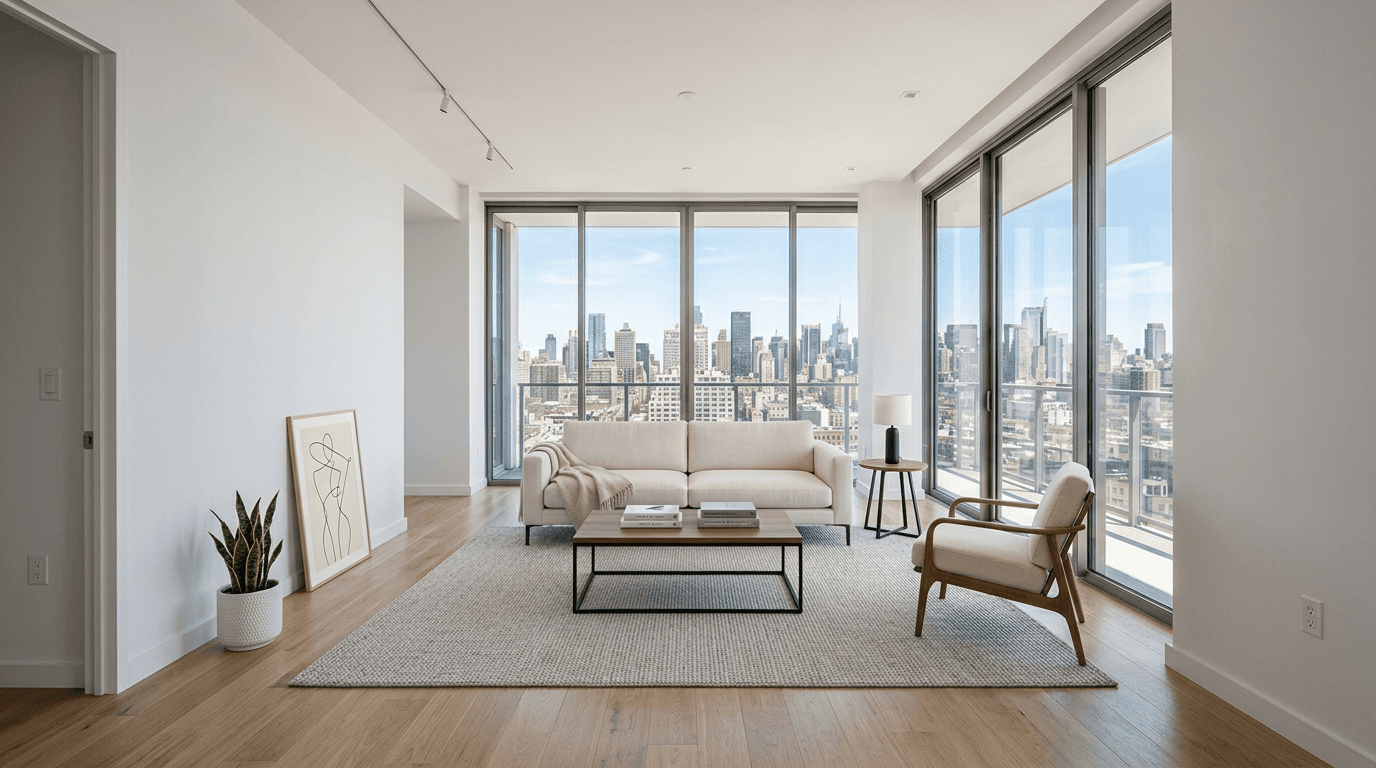
Virtual staging has become one of the highest-ROI marketing tools available to mobile home park investors because it directly addresses the exact problems that suppress occupancy and slow turns across manufactured housing communities: vacant units that feel cold and dated, inconsistent home condition from lot to lot, limited renovation budgets, and the constant pressure to market affordable housing inventory quickly without overspending. In 2026, park owners, operators, and acquisition teams can no longer rely on dim listing photos, empty interiors, or generic leasing copy if they want to compete for qualified residents and improve the perceived quality of their communities. Prospective renters and buyers make snap judgments online, and in a sector where homes often vary significantly in age, layout, finish level, and curb appeal, presentation does not just influence inquiry volume; it shapes perceived value, trust, and speed to occupancy. Used correctly, virtual staging helps investors show the livability, cleanliness, and functionality of a home before investing in a full physical model setup, and it does so at a fraction of the cost of traditional staging. The key, however, is using it strategically, ethically, and operationally across a portfolio. This guide explains exactly how mobile home park investors should deploy virtual staging step by step so they can market homes faster, support leasing and sales teams, and create a more compelling community brand with disciplined, repeatable execution.
According to recent staging metrics by the National Association of Realtors (NAR), professionally staged properties can significantly increase sales speed and perceived value, accelerating the impact for your specific niche.
Step 1: Identify which homes and floor plans will benefit most from virtual staging
The most effective virtual staging strategy for a mobile home park portfolio begins long before images are edited; it starts with deciding where staging will actually move the needle fastest. Many operators make the mistake of treating every vacant home the same, but in manufactured housing communities, vacancy performance is rarely uniform because homes differ by age, width, layout, finish level, utility setup, location within the park, and target resident profile. A dated but structurally sound two-bedroom near the park entrance may need a very different marketing approach than a recently turned three-bedroom with upgraded flooring, and virtual staging should be prioritized where buyer or renter imagination is the primary obstacle. Empty homes with awkward room proportions, older wall paneling, narrow living rooms, or mixed-condition finishes often look smaller and less inviting in raw photography than they feel in person. That disconnect causes prospects to skip the property online before your team has any chance to explain value. Investors should review current vacancy data, inquiry-to-tour conversion rates, days on market by unit type, and common objections from leasing staff to determine where presentation is suppressing demand. Homes that are rent-ready but visually underwhelming, homes that appeal to first-time buyers who need help picturing furniture placement, and acquisition properties being repositioned for lease-up are usually excellent candidates. This step is also where operators should segment inventory into clear categories such as premium rehab, standard turn, value inventory, and as-is fixer opportunities, because each category requires a different level of virtual staging realism and marketing language. By choosing homes strategically instead of indiscriminately, investors can keep costs low, measure results accurately, and ensure virtual staging supports occupancy goals rather than becoming a cosmetic add-on with no operational discipline.
Action Step
Audit your current vacancies and rank the top homes or floor plans where empty photos are likely reducing inquiries, tours, or applications.
Step 2: Capture clean, accurate source photos that make virtual staging believable
Virtual staging is only as strong as the original photography, and this is especially important in mobile home parks where rooms may be compact, lighting can be inconsistent, and older interiors can easily look distorted or darker than they really are. If the source images are poorly framed, cluttered, low resolution, or shot from extreme angles, even the best staging editor will struggle to create believable results, and prospects will immediately sense that the marketing does not match reality. For mobile home park operators, the goal is not to make a home look luxurious beyond its true condition; it is to present it as clean, functional, comfortable, and attainable. That means every photo session should begin after the home has been fully cleaned, debris removed, maintenance punch items minimized, blinds adjusted, and all lights turned on where possible. Windows should be used to create natural brightness, but the camera should also be positioned to capture realistic depth without making narrow hallways or living rooms appear artificially oversized. Investors should establish a standard shot list for every vacancy, including front exterior, living room from at least two angles, kitchen, primary bedroom, secondary bedroom, bathroom, and any feature that matters to affordable housing consumers such as laundry hookups, storage, porch access, or dining area flexibility. Consistency matters across a portfolio because standardized imagery helps your leasing team compare homes, helps acquisition teams benchmark repositioning opportunities, and creates a recognizable brand standard across communities. It is also wise to document current defects honestly before staging begins so your marketing team can avoid digitally covering up material issues that would create fair housing, consumer trust, or disclosure problems later. High-quality source images allow virtual furnishings, rugs, lighting accents, and décor to blend naturally into the space while keeping dimensions believable. In practical terms, better photography improves not only visual appeal but also trust, and trust is one of the fastest ways to increase conversion from online listing view to scheduled tour.
Action Step
Create a standardized vacancy photo checklist and reshoot any key homes whose current images are dark, distorted, inconsistent, or incomplete.
Step 3: Stage for the actual resident profile and price point of the community
One of the biggest errors in virtual staging for manufactured housing is using generic luxury furniture packages that look attractive in isolation but feel completely disconnected from the home, the neighborhood, and the economics of the deal. Mobile home park investors should approach staging as a targeted communication tool, not a decorative exercise. The furnishings, layouts, color palettes, and styling choices should reflect the likely resident or buyer for that specific home and community. For example, a family-oriented all-age park near schools may benefit from staging that shows a practical dining area, durable seating, and a child-friendly bedroom setup, while a quiet age-restricted community may respond better to clean, simplified arrangements that emphasize comfort, ease of movement, and low-maintenance living. In entry-level affordable housing, prospects are often evaluating whether their existing belongings will fit, whether the home feels manageable, and whether the community offers dignity and stability, so staging should answer those concerns visually. That means avoiding overstuffed rooms, unrealistic luxury finishes, and trendy décor that distracts from the actual value proposition. Instead, operators should emphasize scale, circulation, natural light, sleeping capacity, and functional uses for every room. A small second bedroom might be staged as a modest child’s room or home office depending on local demand, while an open living area should clearly communicate where a couch, dining table, and television can go without making the room feel cramped. This is also where portfolio owners can build consistency by selecting a few approved staging styles tied to asset class and resident profile, such as value-clean, family-practical, and upgraded-modern. That discipline helps listings feel intentional rather than random. When staging aligns with resident expectations and community positioning, prospects are more likely to see the home as attainable, trustworthy, and immediately usable, which shortens the imagination gap that often kills affordable housing conversions online.
Action Step
Choose 2 to 3 resident-aligned virtual staging styles and match each vacant home to the style that fits its community, floor plan, and price point.
Step 4: Publish staged images with clear disclosures and integrate them across every leasing channel
Once virtual staging is complete, the real value comes from how systematically those assets are deployed across your marketing ecosystem. Too many operators upload one staged image to a listing portal and stop there, which wastes the broader strategic benefit. Mobile home park investors should distribute staged and unstaged images in a way that increases inquiry volume while maintaining transparency and compliance. Every listing should clearly disclose that select photos have been virtually staged for illustrative purposes, and the raw condition of the home should still be represented honestly through additional unstaged images, video walkthroughs, or in-person tours. This is not only the ethical approach; it also protects leasing credibility and reduces the chance that prospects arrive feeling misled. From an execution standpoint, staged images should become central assets across listing syndication sites, park websites, Google Business Profiles where applicable, paid social campaigns, email follow-up sequences, and leasing team text outreach. A staged living room image can dramatically improve click-through rates in online listings, while a staged bedroom or dining space can help the onsite team answer the question, “How would I use this room?” before the tour is even booked. Investors managing multiple communities should create naming conventions, asset libraries, and approval workflows so that updated staged media can be reused for similar floor plans, seasonal promotions, and occupancy campaigns without operational confusion. It is also important to align images with copy that reinforces affordability, comfort, and practical value rather than overselling cosmetic glamour. If a home has been staged to show a flexible dining nook, the listing description should mention that space. If the exterior suggests a quiet porch lifestyle, the follow-up email should echo that benefit. The more integrated the message, the stronger the conversion path. In short, virtual staging works best when it is not treated as graphic design, but as a coordinated leasing and sales asset that supports trust, speed, and portfolio-wide consistency.
Action Step
Update your listings and marketing workflows so virtually staged images are disclosed properly and reused across portals, website pages, ads, and team follow-up.
Step 5: Measure leasing and sales outcomes, then build a repeatable portfolio playbook
The final step, and the one that separates sophisticated mobile home park investors from casual marketers, is turning virtual staging from a one-off tactic into a measured operating system. In a portfolio environment, every marketing improvement should be evaluated against concrete outcomes such as days vacant, inquiry volume, lead-to-tour conversion, application rate, deposit rate, and in some cases sales velocity for park-owned homes. Investors should compare performance between homes marketed with raw photography only and homes marketed with a disciplined staged package, while controlling as much as possible for price, unit type, location, and turn quality. The goal is not simply to prove that staged images look better; it is to determine whether they reduce vacancy drag, support stronger pricing, improve lead quality, or shorten the time required for onsite teams to explain a home’s value. Over time, patterns will emerge. You may discover that virtual staging is especially effective for older single-wides with empty living rooms, for small bedrooms that need scale cues, or for acquisition communities where online presentation is lagging behind operational improvements. Those insights should be documented in a written playbook covering when to stage, how to photograph, what styles to use, where disclosures must appear, which KPIs to track, and who approves final assets. This creates repeatability across regional teams and makes the practice durable even when staffing changes. It also improves acquisition underwriting because you can estimate how quickly better presentation may accelerate lease-up after a turnaround. In 2026, operators who win are the ones who industrialize simple improvements across many homes, not the ones who rely on ad hoc creativity. A measurable virtual staging process can become a small but meaningful advantage in occupancy management, resident experience perception, and asset-level NOI growth when applied consistently across the portfolio.
Action Step
Track staged-versus-unstaged performance for vacancies this quarter and document a standard virtual staging playbook for your team to use going forward.
Explore More Resources
Conclusion
For mobile home park investors, virtual staging is not about making affordable housing inventory look unrealistic; it is about helping qualified prospects understand the livability, scale, and potential of homes that often underperform in raw photos. When used strategically, it provides a low-cost way to improve listing quality, accelerate tours, strengthen resident confidence, and reduce the vacancy drag that hurts community performance. The strongest results come from prioritizing the right homes, capturing accurate source photography, matching staging to the actual resident profile, distributing the images consistently across every marketing channel, and measuring outcomes with the same rigor applied to rents, turns, and occupancy. In a sector where presentation gaps can meaningfully slow leasing and sales, virtual staging gives owners and operators a practical, repeatable lever for improving marketing efficiency without taking on the cost of full physical staging. For 2026 portfolios focused on faster occupancy and stronger community positioning, this is no longer a novelty; it is a disciplined marketing process that deserves a place in the operating playbook.
Ready to Stage Your First Room?
Join thousands of top real estate professionals who use AI Virtual Staging to instantly transform vacant photos into fully-furnished masterpieces in under 20 seconds.
Start Staging For FreeFrequently Asked Questions
Is virtual staging appropriate for older mobile homes that still have dated finishes?
Yes, as long as it is used honestly. Virtual staging is especially useful for older mobile homes because empty rooms with dated finishes often photograph worse than they feel in person. The purpose is to show furniture placement, livability, and room function without digitally hiding material defects or implying renovations that have not been completed. Investors should disclose that images are virtually staged and ensure the final marketing package still reflects the true condition of the home.
How much can virtual staging help reduce vacancy in a manufactured housing community?
Results vary by market, pricing, home condition, and listing quality, but virtual staging can improve the first impression that drives inquiries and tours. In many communities, the biggest benefit is not just more clicks but better understanding of room scale and use, which can improve lead conversion for homes that otherwise feel small, awkward, or uninviting online. Its impact is strongest when paired with clean photography, accurate pricing, and responsive leasing follow-up.
Should mobile home park operators use staged photos for rentals, sales, or both?
Both. For rentals, staged photos help prospects visualize everyday living and can increase confidence in booking a tour quickly. For sales of park-owned homes, staging can support perceived value and reduce hesitation from first-time manufactured home buyers who may struggle to interpret empty interiors. The same disclosure and accuracy standards should apply in either case.
What rooms should be virtually staged first in a vacant mobile home?
The highest-priority rooms are typically the living room, primary bedroom, and any dining area or flexible second bedroom. These spaces do the most work in helping prospects understand how the home functions. Kitchens and bathrooms are usually better presented clean and well lit rather than heavily staged, although subtle virtual enhancements may still be used if they remain realistic and clearly disclosed.
Can virtual staging be scaled across multiple communities in a portfolio?
Yes, and that is where it often becomes most valuable for investors. Portfolio-scale virtual staging works best when operators create standard photography guidelines, approved staging styles, disclosure rules, asset naming conventions, and performance metrics. With those systems in place, leasing teams can market vacancies faster and more consistently across communities while ownership gains clearer data on what presentation strategies improve occupancy and sales outcomes.
Explore More Guides
Continue building your real estate expertise.
The Step-by-Step Guide to Virtual Staging for Memory Care Community Sales Directors
An authoritative step-by-step guide for Memory Care Community Sales Directors on using virtual staging to fill private-pay suites and shared spaces with warm, calming, safety-forward visuals that help families decide faster in 2026.
The Step-by-Step Guide to Virtual Staging for Casino Hotel Expansion Marketing Teams
An authoritative step-by-step guide for casino hotel expansion marketing teams using virtual staging to market new towers, renovated rooms, VIP suites, and phased hospitality openings before final photography is available.
The Step-by-Step Guide to Virtual Staging for Assisted Living Occupancy Marketing Teams
An authoritative step-by-step guide for assisted living and independent living occupancy marketing teams on using virtual staging to transform vacant suites into warm, hospitality-style visuals that increase inquiries, support faster lease-ups, and improve senior living marketing performance in 2026.
The Step-by-Step Guide to Virtual Staging for Fire-Damaged Property Restoration Brokers
An authoritative 2026 step-by-step guide for fire-damaged property restoration brokers on using virtual staging to market reconstructed or partially restored homes, reduce stigma, clarify end-state vision, and build confidence with buyers, insurers, and sellers.
The Step-by-Step Guide to Virtual Staging for Co-Living Operators
Learn how co-living operators can use virtual staging to present private rooms, shared kitchens, lounges, and workspaces with clarity, consistency, and premium lifestyle appeal in 2026. This step-by-step guide explains how to plan, stage, standardize, and scale listing visuals across shared housing portfolios.
The Step-by-Step Guide to Virtual Staging for Maritime Waterfront Home Brokerages
An authoritative 2026 step-by-step guide for maritime waterfront home brokerages on using virtual staging to elevate coastal cottages, canal homes, boathouse properties, and waterfront residences with premium listing visuals that support stronger pricing and buyer engagement.