
The Step-by-Step Guide to Virtual Staging for Tiny Home Village Developers
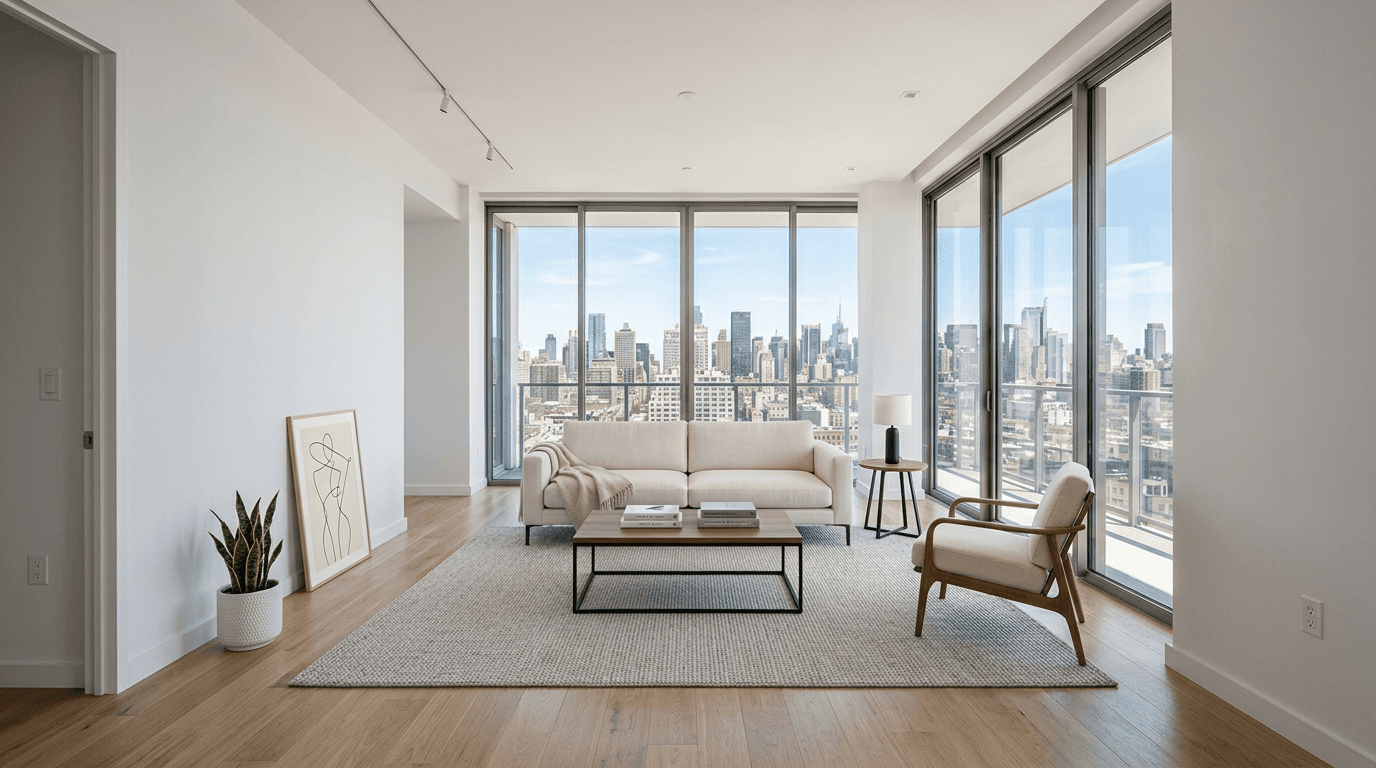
Virtual staging has moved from a nice-to-have listing enhancement to a core revenue tool for tiny home village developers in 2026, because the central challenge in marketing a small-footprint product is not simply attracting attention, but eliminating doubt. Empty tiny homes often photograph as tighter, colder, and less functional than they feel in person, which creates immediate friction for buyers, renters, and investors trying to assess whether the space can support real daily living. For developers and operators of tiny home communities, that problem compounds across the entire project: you are not selling one box, you are selling a livable layout, a repeatable lifestyle, and a believable vision of efficient, design-forward community living. Effective virtual staging solves this by making micro-spaces legible. It helps prospects understand circulation, storage logic, furniture scale, indoor-outdoor flow, work-from-home potential, and the emotional experience of living inside a compact home without physically furnishing every unit or model. More importantly, it allows developers to present multiple use cases across homes for sale, rental inventory, and hybrid resort-residential formats while controlling brand consistency, launch timelines, and marketing costs. This guide breaks down exactly how tiny home village developers should use virtual staging strategically, so your imagery does more than look attractive; it should answer objections, support pricing, improve absorption, and help prospects see themselves living in the community with confidence.
According to recent staging metrics by the National Association of Realtors (NAR), professionally staged properties can significantly increase sales speed and perceived value, accelerating the impact for your specific niche.
Step 1: Define the buyer, renter, and guest personas before you stage a single room
The most effective virtual staging for a tiny home village begins long before furniture is added to a rendering or listing photo, because the real objective is not decoration but persuasion. Developers often make the mistake of staging all units with a generic minimalist look that appears tasteful but fails to answer the specific questions different audiences bring to the project. A downsizing retiree wants proof that the home feels calm, accessible, and uncluttered without sacrificing dignity or comfort. A younger remote worker wants to understand whether there is a credible place to work, store equipment, host a partner, and still relax. A short-term rental guest evaluating a resort-style village wants an aspirational, hospitality-driven experience that feels memorable and Instagrammable, while a long-term renter is evaluating daily functionality, storage, and routine. If your village includes homes for sale, homes for rent, and short-stay inventory, these personas should shape distinct staging narratives rather than one visual treatment repeated everywhere. Start by mapping each product type, unit plan, and target segment to the specific objections they are likely to hold, such as concerns about sleeping arrangements, kitchen usability, privacy, pet accommodation, or whether the home feels too cramped for real life. Then translate those objections into visual proof. For example, a murphy bed or banquette may need to be shown in active use, a dining nook should demonstrate comfortable scale, and outdoor seating may need to communicate that the private deck effectively expands the living area. The strongest virtual staging strategy works because it is rooted in customer psychology and merchandising logic, not simply aesthetics. In tiny home development, every object shown should justify how the home works, who it serves, and why the community lifestyle is practical as well as appealing.
Action Step
Create a persona-to-floor-plan matrix that lists your top target audiences, their biggest objections, and the visual staging elements needed to answer each concern.
Step 2: Select images and viewpoints that prove livability, scale, and flow in small footprints
In traditional residential marketing, a mediocre photo can sometimes be rescued by square footage, but in tiny home villages, image selection is inseparable from conversion performance because prospects are trying to interpret extremely compact dimensions from a flat screen. That means your base photography or render source material must be chosen with unusual discipline. The right viewpoint should not merely show that a room exists; it should explain how the room functions and how one space transitions into the next. For tiny homes, the most persuasive images are typically the ones that demonstrate sight lines, ceiling height, daylight, built-in storage, furniture clearance, and multiuse zones in a single frame. A kitchen should be photographed from an angle that shows prep surface, appliance integration, and relationship to living space. The sleeping loft or bedroom should be shown in a way that communicates access, headroom, and realistic use, rather than as an abstract corner. If a home includes fold-down tables, convertible sofas, stair storage, or integrated desks, the camera angle must emphasize those problem-solving design features because they are often central to the prospect’s decision. For developers marketing an entire village, it is equally important to stage exterior and semi-public views that place the home within a broader lifestyle ecosystem, including porches, pathways, fire pits, clubhouse amenities, coworking zones, gardens, parking, and view corridors. This helps prevent the common problem of tiny homes being interpreted as isolated novelty products rather than components of a thoughtfully planned community. Before any virtual staging begins, audit every planned image and ask whether it answers one of three questions: how big does it feel, how does it work, and what is daily life like here? If an image cannot do at least one of those jobs, it should not be prioritized. In small-space marketing, visual economy matters, and every angle must earn its place by reducing uncertainty and reinforcing value.
Action Step
Audit your current photography and render library, then shortlist only the angles that clearly demonstrate scale, storage, circulation, and indoor-outdoor lifestyle.
Step 3: Stage each unit to communicate realistic function, not fantasy design
One of the fastest ways to undermine trust in virtual staging for tiny home communities is to furnish units in a way that looks editorially beautiful but physically implausible. Tiny home prospects are exceptionally sensitive to authenticity because they are actively looking for evidence that a compact dwelling can support real habits, real belongings, and real routines. If your virtually staged imagery includes oversized sofas, impossibly narrow walkways, decorative objects that consume valuable surface area, or a dining setup that no one could comfortably use, the image may attract attention but it will not convert serious leads. The better approach is to treat virtual staging as a visual operations tool that demonstrates exacting functional logic. Furniture scale should be proportionate to the floor plan and reveal viable circulation paths. Storage cues should be intentional, showing hooks, shelving, under-bed solutions, entry organization, and kitchen efficiency without making the space appear crowded. Lifestyle cues should support the specific use case of the unit, whether that means a laptop and task lighting for a work-friendly rental, a comfortable reading chair and simplified furnishings for a 55-plus buyer, or layered textiles and hospitality accents for a resort-oriented stay product. Developers should also think in terms of spatial sequencing. In a tiny home, prospects need reassurance that cooking, relaxing, sleeping, dressing, and working can all happen without constant friction. Virtual staging should therefore show zones that feel differentiated yet cohesive, often through rugs, lighting, furniture orientation, and restrained decor. It is also wise to stage more than one design package across the community if you serve multiple audience segments, as this allows you to market the same footprint differently while preserving architectural consistency. The core principle is simple: your images should make viewers think, “I can actually live like this,” rather than, “This looks stylish in theory.” In tiny home development, credibility is the highest-performing aesthetic.
Action Step
Review every staged room for furniture scale, walking clearance, storage logic, and audience fit, and remove any visual element that looks attractive but unrealistic.
Step 4: Use community-level virtual staging to sell the village lifestyle, not just the individual home
Tiny home village developers often focus heavily on staging the interiors of the homes themselves, but prospects do not make decisions based on interior square footage alone. They are evaluating whether the community expands the usability of the private unit and creates a compelling overall way of life. This is especially true in hybrid models that blend residential ownership, long-term rental, hospitality, wellness, or resort programming. In those cases, community-level virtual staging becomes one of the most powerful tools in the entire marketing stack because it helps prospects understand that the village is the product, and the home is one part of that product. Exterior and amenity imagery should therefore be staged to communicate how residents, renters, or guests actually spend time across the site. Show a porch arranged for morning coffee and neighbor interaction. Show a shared green, clubhouse, sauna, pool, coworking lounge, trail connection, garden bed, dog run, or fire pit in use-appropriate ways that reflect your true brand positioning. If your development promises simplicity, wellness, sustainability, social connection, work flexibility, or vacation-style escape, those themes must be visible in the staged scenes rather than left to marketing copy alone. At the same time, restraint matters. Community scenes should feel activated but not crowded, curated but not artificial. They should demonstrate privacy where it matters and social energy where it adds value. For developers trying to justify pricing or HOA-like fees, community-level visuals are particularly important because they help explain what residents are buying beyond the unit walls. They also support stronger absorption during pre-leasing or pre-sales because they allow prospects to emotionally pre-experience the completed environment before the entire village is built or fully furnished. In a category where many consumers still question whether tiny living feels limiting, community virtual staging reframes the narrative: the private home is efficient by design because the village itself delivers space, amenities, and lifestyle richness at a broader scale.
Action Step
Build a community staging plan that includes key amenity zones, streetscapes, porches, and gathering areas to show how the village extends the value of each home.
Step 5: Deploy virtual staging across the full sales and leasing funnel, then measure what converts
Virtual staging delivers the highest return for tiny home village developers when it is treated as a conversion asset across the full marketing funnel rather than as a one-time listing embellishment. Once your imagery is created, it should be deployed intentionally based on where the prospect is in the decision journey and what doubts still need to be resolved. At the top of the funnel, lifestyle-forward staged images are ideal for paid social, display campaigns, press outreach, and landing pages because they generate initial emotional interest and differentiate your project from generic small-home inventory. In the middle of the funnel, more function-oriented staged images should appear on unit pages, brochures, investor decks, leasing emails, and retargeting ads to help prospects compare layouts, understand utility, and justify pricing. At the bottom of the funnel, virtually staged floor plans, side-by-side empty versus staged views, and use-case-specific presentations can help sales teams and leasing teams answer final objections around storage, furniture fit, remote work viability, guest accommodation, or how a unit supports full-time living. This is also where developers should begin measuring results with discipline. Track engagement differences between staged and unstaged assets, lead-to-tour rates, tour-to-application or contract rates, time-on-page for specific layouts, and whether certain staging styles perform better with distinct audience segments. For communities selling multiple product types, this analysis can directly inform which unit plans to feature more prominently, how to sequence website galleries, and what furnishing concepts should influence actual model homes or amenity design. In 2026, sophisticated developers are no longer asking whether virtual staging looks good; they are asking whether it reduces acquisition costs, increases confidence, accelerates lease-up or absorption, and improves the quality of inquiries. The real advantage comes from integrating imagery with sales operations, digital strategy, and performance analysis so that every staged visual serves a measurable business objective.
Action Step
Map your staged assets to each stage of the funnel and start tracking performance metrics such as click-through rate, lead quality, tour bookings, and conversion by image set.
Explore More Resources
Conclusion
For tiny home village developers, virtual staging is most powerful when it is approached as a strategic proof-of-livability system rather than a cosmetic marketing add-on. Small spaces create outsized uncertainty for prospects, and your imagery must work harder than conventional real estate photography to explain scale, function, comfort, and community value. By defining personas first, selecting views that reveal flow, staging with realistic functional discipline, extending the story to amenities and shared spaces, and deploying assets throughout the sales and leasing funnel, developers can turn compact homes from question marks into compelling, high-conviction products. In a category where buyers, renters, and guests are evaluating not only square footage but a new way of living, the best virtual staging helps them see efficiency as freedom, design as utility, and the village itself as the reason the homes work so well.
Ready to Stage Your First Room?
Join thousands of top real estate professionals who use AI Virtual Staging to instantly transform vacant photos into fully-furnished masterpieces in under 20 seconds.
Start Staging For FreeFrequently Asked Questions
Why is virtual staging especially important for tiny home village developments?
Because tiny homes are compact by nature, empty interiors tend to look smaller, less warm, and less functional in photos than they do in person. Virtual staging helps developers show furniture scale, storage logic, room flow, and daily usability so prospects can better understand how the home supports real living. It also helps market the broader village lifestyle, which is often a key driver of demand.
Should every tiny home in a village use the same virtual staging style?
Not necessarily. While brand consistency matters, the most effective strategy is usually to create staging variations based on target audience and product type. A short-term rental unit may benefit from hospitality-driven styling, while a for-sale unit for downsizers may need calmer, highly practical staging. The goal is consistent brand identity with audience-specific visual storytelling.
Can virtual staging help with pre-sales or pre-leasing before the community is complete?
Yes. In fact, that is one of its strongest use cases. Developers can use virtual staging on model unit photography, architectural visualizations, and amenity renderings to help prospects emotionally understand the finished product before full build-out. This can improve early lead generation, support pricing, and accelerate absorption during launch phases.
What mistakes do tiny home developers make with virtual staging?
The most common mistakes include using oversized furniture, creating unrealistic circulation paths, over-decorating already small spaces, and focusing only on interior rooms while ignoring porches, pathways, and amenity areas. Another major mistake is staging for aesthetics alone rather than using imagery to answer practical buyer and renter objections about livability.
How do developers measure whether virtual staging is working?
They should track both marketing and sales outcomes. Useful metrics include click-through rates on ads, time on page for staged galleries, inquiry volume, lead quality, tour booking rates, application or contract conversion rates, and speed of lease-up or unit absorption. Comparing staged and unstaged asset performance can reveal which visuals most effectively increase confidence and drive action.
Explore More Guides
Continue building your real estate expertise.
The Step-by-Step Guide to Virtual Staging for Vacation Rental Cabin Resort Operators
An authoritative 2026 step-by-step guide for vacation rental cabin resort operators on using virtual staging to improve listing photos, preserve rustic character, compete on OTAs, and increase bookings across seasonal inventory.
The Step-by-Step Guide to Virtual Staging for Institutional Single-Family Rental Leasing Teams
An authoritative 2026 step-by-step guide for institutional single-family rental leasing teams on using virtual staging to standardize listing presentation, speed vacancy turnaround, improve portfolio-wide visual quality, and support faster leasing across scattered-site homes.
The Step-by-Step Guide to Virtual Staging for Medical Office Building Leasing Teams
An authoritative 2026 step-by-step guide for medical office building leasing teams on using virtual staging to market vacant suites, clarify layout potential, and help healthcare tenants envision exam rooms, reception areas, and administrative zones.
The Step-by-Step Guide to Virtual Staging for Corporate Housing Relocation Firms
An authoritative 2026 step-by-step guide for corporate housing relocation firms on using virtual staging to standardize listings, accelerate approvals, and present furnished temporary housing for executives, families, consultants, and healthcare travelers across changing markets.
The Step-by-Step Guide to Virtual Staging for Resident Retention Marketing for Multifamily Operators
An authoritative step-by-step guide for multifamily operators on using virtual staging to improve resident retention, support renewal campaigns, drive internal transfers, and justify upgraded unit rent premiums in 2026.
The Step-by-Step Guide to Virtual Staging for Farm and Ranch Auction Marketing Firms
Learn how farm and ranch auction marketing firms can use virtual staging to elevate rural property presentation, accelerate pre-auction marketing, and inspire higher bidder confidence for agricultural estates, ranch houses, hunting lodges, and rural residential compounds in 2026.