
The Step-by-Step Guide to Virtual Staging for Mixed-Use Retail Residential Lease-Up Teams
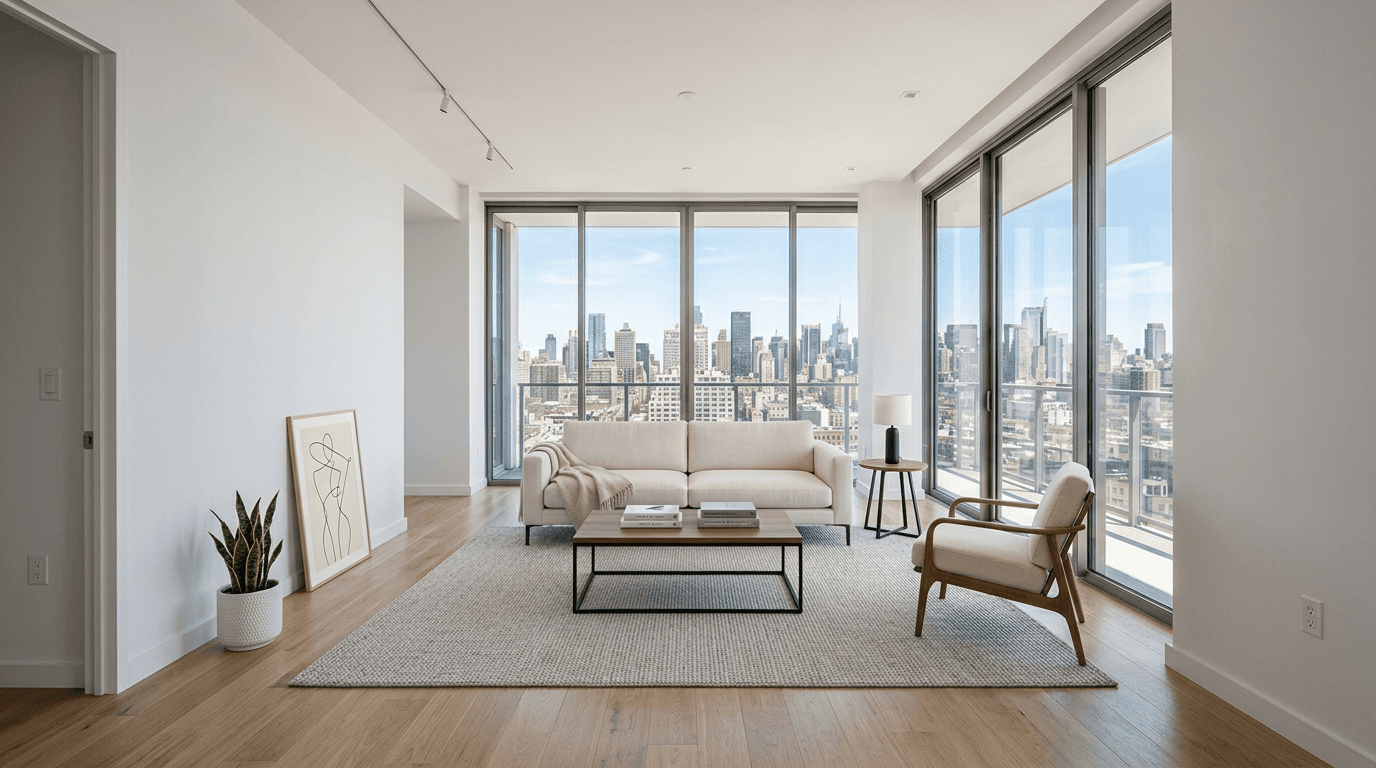
For mixed-use retail residential lease-up teams, virtual staging is no longer a cosmetic marketing add-on; it is a strategic leasing tool that helps developers sell an unfinished ecosystem before the ecosystem fully exists. In 2026, projects with apartments or condos over retail must persuade prospects to believe in two connected promises at once: a desirable home upstairs and a compelling, active streetscape below. That is difficult when residential units are pristine but empty, storefronts are still in shell condition, and only a portion of the commercial roster has signed. Prospective residents do not simply evaluate square footage and finishes; they judge whether the block will feel alive, convenient, social, and worth the premium. Retail tenants, in turn, want evidence of residential demand, walkability, and brand-compatible energy. The right virtual staging program closes this imagination gap by creating credible, market-specific scenes that communicate lifestyle, tenancy potential, and placemaking momentum without overpromising what operations cannot deliver. This guide explains how lease-up teams can use virtual staging to align residential absorption, retail merchandising, broker outreach, digital campaigns, and on-site tours into one coherent visual story that helps empty space feel inevitable rather than uncertain.
According to recent staging metrics by the National Association of Realtors (NAR), professionally staged properties can significantly increase sales speed and perceived value, accelerating the impact for your specific niche.
Step 1: Build a leasing narrative before you stage a single image
The most effective virtual staging for a mixed-use project begins well before any designer adds furniture, café seating, signage, or shoppers to a rendering or photo. Lease-up teams need to define the project’s market narrative with precision, because virtual staging should visualize strategy rather than compensate for a lack of one. In practice, that means identifying exactly what the development must communicate to different audiences and where those messages overlap. A residential renter may need reassurance that ground-floor retail will create convenience and energy without noise or chaos, while a neighborhood-serving retailer may need proof that the resident base is affluent, active, and likely to generate repeat visits. An investor-minded condo buyer may be drawn to a polished streetscape that signals long-term value, and a restaurant prospect may care more about patio potential, pedestrian flow, and evening ambiance. If every staged image tries to say everything to everyone, the result will feel generic and unconvincing. Instead, define core positioning pillars such as wellness-oriented living, commuter convenience, family-friendly urbanism, destination dining, or boutique neighborhood retail, then map each pillar to visual scenes. A lobby image might emphasize seamless transition between home and street life, a rooftop scene might reinforce residential prestige, and a storefront perspective might depict the type of tenancy mix that complements the target resident profile. This planning phase should also account for what is already signed, what is merely targeted, what operationally can be delivered in year one, and what should remain aspirational but plausible. The authority of your marketing depends on this discipline. Virtual staging works best when it functions as a visual leasing argument, not as decoration, because prospects are assessing the credibility of the entire place, not just the aesthetics of an isolated room or façade.
Action Step
Create a project narrative brief that defines your target resident, target retail categories, placemaking promise, signed realities, and the exact lifestyle themes each staged image must support.
Step 2: Stage residential and retail together as one ecosystem, not two separate campaigns
A common mistake in mixed-use lease-up is to market the residential component and the retail component as if they operate independently, when in reality each one validates the other. Virtual staging should therefore be developed as an ecosystem strategy that shows how daily life moves between private unit interiors, shared amenities, sidewalks, storefronts, and public gathering areas. Residential prospects are not just leasing an apartment or buying a condo; they are buying into a pattern of life in which morning coffee, casual dining, fitness routines, services, and social activity are embedded in the block. Likewise, retail prospects are not only taking square footage; they are joining a curated environment whose resident base, foot traffic, and visual identity shape long-term viability. To capture this interdependence, your staged assets should create continuity across channels and scenes. The furniture style in model-unit imagery should feel compatible with the architectural character and merchandising tone depicted at street level. If the development is positioned as elevated and design-forward, the retail scenes should suggest boutique fitness, refined café culture, specialty food, or polished service brands rather than a random assortment of uses. If it is family-oriented and neighborhood-centric, the imagery should show wider sidewalks, stroller-friendly circulation, practical conveniences, and daytime activation that feels authentic to local demand. This is also where mixed-use teams can strategically stage partial occupancy without making the site feel underleased. A block can be shown with one active corner café, one soft goods retailer, attractive window graphics for future tenants, and well-programmed outdoor seating so that momentum is visible even if the roster is not yet complete. The objective is to communicate inevitability: residents can imagine life there immediately, and retailers can see evidence of a growing customer base. When your visual system links upper-floor living to lower-level activity, the project stops reading as an unfinished construction effort and starts reading as a functioning neighborhood node.
Action Step
Audit all current marketing visuals and replace siloed residential-only or retail-only assets with a coordinated image set that shows how units, amenities, storefronts, sidewalks, and gathering spaces work together.
Step 3: Use market-credible scenes that reflect actual lease-up sequencing and tenant reality
Virtual staging becomes powerful and trustworthy when it respects the realities of delivery timing, leasing velocity, and tenant mix evolution. Mixed-use teams often undermine their own credibility by publishing visuals that imply a fully stabilized streetfront, packed dining patios, and a mature resident community long before those conditions are operationally possible. Sophisticated prospects can detect that mismatch quickly, and once confidence is lost, every other leasing message becomes harder to believe. The better approach is to create market-credible staged scenes that mirror expected phases of activation while still inspiring confidence. For example, in early pre-leasing, unit imagery may do the heavy lifting inside the residential program, while exterior and retail scenes should emphasize architectural quality, clean merchandising, branded leasing windows, one or two plausible activated storefronts, clear pedestrian pathways, and signage that signals incoming uses without inventing signed tenants that do not exist. As commercial commitments firm up, refreshed staged assets can show category-appropriate operations such as a morning coffee concept, neighborhood restaurant, boutique wellness operator, or service retailer that genuinely fits the underwriting and trade area. Seasonality matters too. A spring lease-up campaign might feature open façades, sunlight, and flexible outdoor seating, while a winter campaign can depict warmth, lighting, and cozy street energy. Demographic realism matters just as much: the people represented in these scenes should reflect the target household mix and surrounding community, not stock-photo stereotypes. In 2026, buyers and renters are highly attuned to authenticity, and brokers expect visual materials to support, rather than contradict, the actual tenanting plan. By staging scenes that are aspirational yet operationally grounded, you create a visual progression that can be updated as the asset matures, preserving trust while keeping the marketing fresh throughout the lease-up cycle.
Action Step
Develop three staging phases—pre-leasing, initial activation, and momentum phase—with different image sets that match realistic tenancy timing, signed deals, and seasonal campaign needs.
Step 4: Deploy virtual staging across every leasing touchpoint, not just listing photos
Many teams limit virtual staging to a handful of hero images for listing portals or a website gallery, but mixed-use lease-up requires a broader distribution strategy because prospects encounter the project in fragments before they ever arrive for a tour. The strongest programs treat staged imagery as a core content system that powers residential advertising, retail broker packages, email campaigns, social media, geofenced outreach, investor presentations, leasing office displays, construction fencing graphics, digital brochures, and interactive tour experiences. This matters because mixed-use projects must tell a more complex story than a conventional multifamily building: they are selling a place in formation, and repeated visual consistency is what turns that concept into belief. A prospect may first see a paid social ad showing the sidewalk energy outside the building, then click through to a unit page highlighting a staged living room and view corridor, then visit the site and encounter window graphics that reinforce the same retail categories and lifestyle cues. A restaurant broker may receive a leasing flyer that uses the identical streetscape visual language the residential team is using in renter campaigns, instantly conveying coordinated curation rather than fragmented marketing. On-site, leasing teams can use staged before-and-after boards, tablet walkthroughs, and amenity-to-retail connection maps to explain how the lived experience will function as occupancy grows. Even temporary conditions can be managed through staging: if certain corners remain inactive, construction hoarding, digital displays, and QR-enabled storytelling can fill the imagination gap. The lesson is simple but often missed: virtual staging should support the entire conversion funnel from first impression to signed lease. The more places your audience sees the same coherent, plausible, high-quality vision, the easier it becomes for them to internalize the future state of the project as something real, near-term, and worth committing to now.
Action Step
Create a channel deployment plan that assigns specific staged visuals to your website, ILS listings, broker outreach, email nurturing, social ads, leasing office screens, signage, and on-site tour materials.
Step 5: Measure performance, refine visuals, and protect trust with accurate execution standards
The final step is where sophisticated lease-up teams separate creative activity from measurable leasing performance. Virtual staging should be managed with the same rigor applied to pricing strategy, lead tracking, and tenant pipeline management. Start by establishing what success looks like for each audience and asset type: higher click-through rates on residential ads, longer time on page for unit galleries, improved tour-to-application conversion, stronger response from retail brokers, faster LOI activity on key storefronts, or reduced objections related to unfinished surroundings. Once those metrics are in place, test staged imagery against unstaged imagery and against alternate staged concepts. You may find that prospects respond more strongly to scenes emphasizing practical daily convenience than to overtly aspirational luxury cues, or that evening streetscape visuals outperform daytime scenes for dining-oriented retail bays while morning activation drives better apartment leads. At the same time, teams must maintain strict accuracy standards. In 2026, consumer skepticism and regulatory scrutiny around digitally enhanced real estate marketing are both higher, so every visual should be clearly rooted in deliverable conditions. That means avoiding fabricated views, misrepresented dimensions, impossible tenant signage, or amenities that will not be accessible as shown. Internally, align marketing, development, leasing, retail brokerage, and property operations around an approval workflow so that staged assets remain current as construction milestones, tenant commitments, and opening timelines evolve. A beautifully staged campaign can accelerate leasing only if it is continuously validated by what prospects experience when they visit, inquire, or move in. Done properly, virtual staging becomes a living operational tool: it informs what the market sees, helps the team identify which narratives convert best, and preserves the trust that ultimately determines whether a mixed-use project achieves pricing power and sustained absorption.
Action Step
Set KPIs for staged asset performance, run A/B tests by audience and scene type, and implement an approval process to ensure every published visual remains accurate, current, and operationally defensible.
Explore More Resources
Conclusion
For mixed-use retail residential lease-up teams, virtual staging is most effective when it is treated as a strategic placemaking system rather than a simple image enhancement tactic. The goal is not merely to make empty units or raw storefronts look attractive, but to make the entire project feel coherent, livable, and commercially viable before full occupancy is reached. By defining a clear leasing narrative, staging the residential and retail components as one interdependent ecosystem, aligning visuals with real-world lease-up timing, distributing those visuals across every marketing touchpoint, and continuously measuring performance while protecting credibility, developers can turn uncertainty into momentum. In a market where prospects must believe in both lifestyle and activation simultaneously, strong visual storytelling helps empty space communicate inevitability, and that is exactly what drives earlier commitments, stronger pricing confidence, and a more successful launch.
Ready to Stage Your First Room?
Join thousands of top real estate professionals who use AI Virtual Staging to instantly transform vacant photos into fully-furnished masterpieces in under 20 seconds.
Start Staging For FreeFrequently Asked Questions
Why is virtual staging especially important for mixed-use lease-up teams compared to traditional apartment marketing?
Because mixed-use projects must sell more than individual homes. They must persuade prospects that the residential experience and the street-level commercial environment will reinforce each other. Virtual staging helps renters, buyers, and retail tenants understand how the full ecosystem will function even when portions of the project are still under construction or not yet fully leased.
Can virtual staging help lease retail space even if not all commercial tenants are signed yet?
Yes, if it is done credibly. Lease-up teams can use category-based staging to show the type of activation the project is designed to support without falsely implying signed tenants. This helps brokers and prospective retailers visualize adjacency, customer flow, merchandising potential, and overall placemaking direction while preserving trust.
What types of spaces should mixed-use teams prioritize for virtual staging first?
Start with the highest-impact spaces that bridge the residential and retail story: key unit types, street-facing façades, main corners, lobby-to-street transitions, amenity areas that support lifestyle positioning, and the most visible storefront opportunities. These scenes create the clearest sense of how daily life will actually unfold on site.
How often should staged visuals be updated during a lease-up?
They should be updated whenever the project reaches meaningful milestones such as new retail signings, construction progress, amenity completion, seasonal campaign shifts, or changes in the target leasing narrative. Mixed-use marketing is dynamic, and staged imagery should evolve to remain both compelling and accurate.
How can teams avoid making virtual staging look unrealistic or misleading?
The best safeguard is to tie every image to achievable conditions, approved design standards, realistic tenancy assumptions, and current delivery timelines. Use staging to clarify the future experience, not to invent one. Internal review by development, leasing, retail brokerage, and operations teams helps ensure the visuals remain persuasive without crossing into misrepresentation.
Explore More Guides
Continue building your real estate expertise.
The Step-by-Step Guide to Virtual Staging for Furnished Executive Rental Operators
An authoritative 2026 step-by-step guide for furnished executive rental operators on using virtual staging to create consistent premium listings, justify higher rates, reduce vacancy friction, and improve image quality across fast-turn inventory.
The Step-by-Step Guide to Virtual Staging for Failed Short-Term Rental Repositioning Consultants
An authoritative 2026 step-by-step guide for consultants using virtual staging to reposition failed short-term rentals into mid-term, furnished monthly, or long-term residential assets with stronger tenant appeal and clearer investment narratives.
The Step-by-Step Guide to Virtual Staging for Outdoor Hospitality Glamping Residence Brokers
An authoritative 2026 step-by-step guide for outdoor hospitality glamping residence brokers on using virtual staging to market glamping resorts, park model cabin communities, and experiential hospitality properties with residential components.
The Step-by-Step Guide to Virtual Staging for Conversion of Motels to Micro-Apartments Developers
An authoritative 2026 step-by-step guide for developers using virtual staging to reposition converted motels as desirable micro-apartments, workforce housing, and compact rental communities that lease faster and overcome layout stigma.
The Step-by-Step Guide to Virtual Staging for Home Organization Franchise Marketing Teams
An authoritative 2026 step-by-step guide for home organization franchise marketing teams using virtual staging to create aspirational, branded visuals that drive leads across closet, pantry, garage, and storage transformation markets.
The Step-by-Step Guide to Virtual Staging for Mountain Modern Custom Home Builders
An authoritative 2026 step-by-step guide for mountain modern custom home builders on using virtual staging to market vacant new builds, reduce carrying costs, and help buyers connect alpine architecture to an aspirational lifestyle.