
The Step-by-Step Guide to Virtual Staging for Build-to-Rent Community Developers
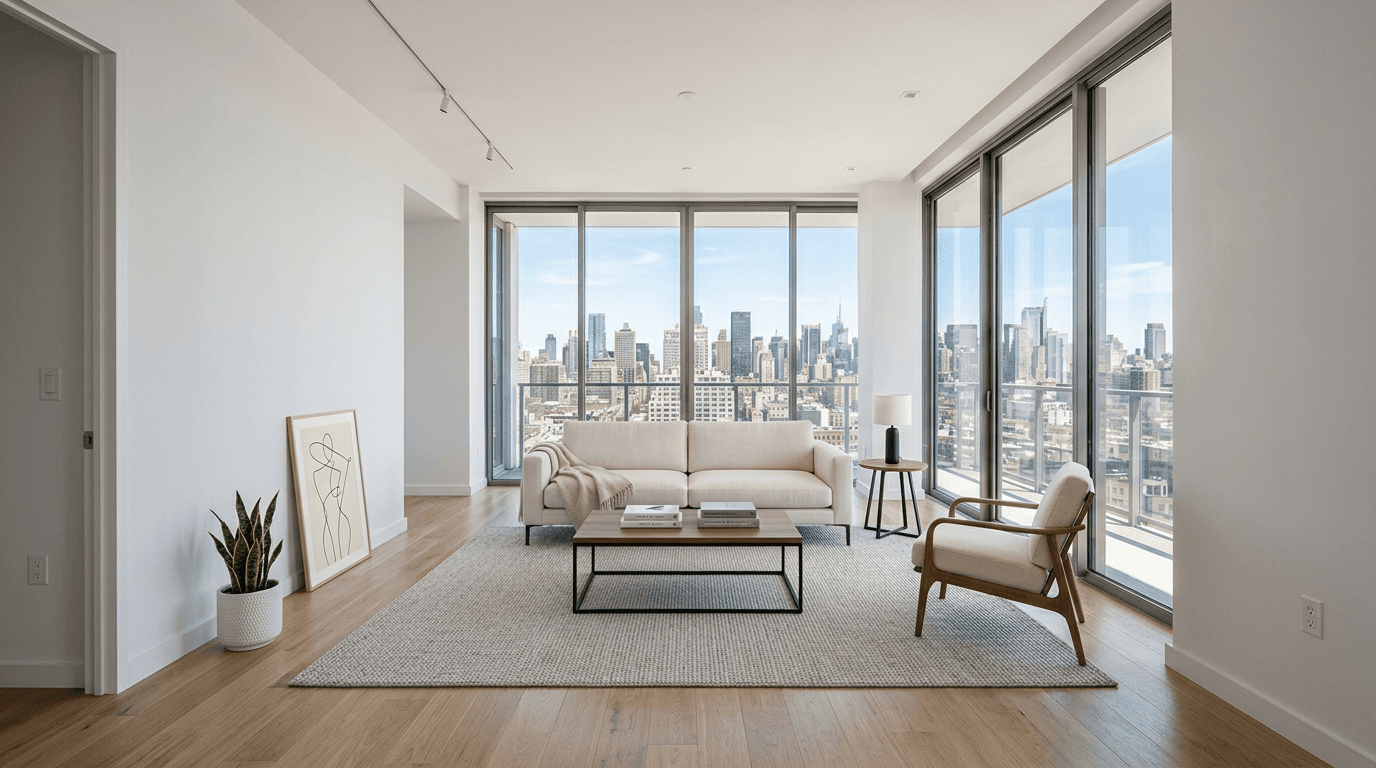
For build-to-rent community developers, virtual staging is no longer a nice visual upgrade; in 2026, it is a core lease-up and absorption tool that solves some of the most persistent problems in the category. Developers are routinely asked to market neighborhoods before model homes are complete, generate demand across multiple floor plans that may share the same shell but target different renter segments, and communicate a cohesive lifestyle story that extends beyond bedrooms, bathrooms, and square footage. That challenge is even greater in single-family rental communities and scattered-site portfolios, where prospects are not simply comparing rent prices but evaluating whether a home, a block, and a neighborhood experience fit the way they want to live. A vacant interior rarely answers that question. Strategic virtual staging does. When used correctly, it helps developers transform unfinished inventory, plan-specific renderings, and empty homes into persuasive visual assets that guide prospects from first impression to signed lease. The most effective teams do not treat virtual staging as decoration; they treat it as a disciplined marketing system tied to audience segmentation, brand consistency, channel performance, and speed to market. This guide explains exactly how build-to-rent developers should deploy virtual staging step by step so every home plan, marketing campaign, and pre-leasing initiative works harder from day one.
According to recent staging metrics by the National Association of Realtors (NAR), professionally staged properties can significantly increase sales speed and perceived value, accelerating the impact for your specific niche.
Step 1: Build your virtual staging strategy around renter segments, lease-up timing, and community positioning
The most successful virtual staging programs for build-to-rent communities begin long before anyone chooses a sofa style or wall art package. Developers should first define what each visual asset is supposed to accomplish in the lease-up journey, because staging that is not tied to strategy often becomes generic, inconsistent, and ineffective. In a build-to-rent environment, you are typically marketing to several overlapping audience groups at once: young professionals seeking a low-maintenance detached home, families prioritizing bedrooms and backyard space, downsizing renters who still want privacy and storage, and relocation households looking for convenience and immediate move-in certainty. Each of those audiences interprets the same floor plan differently. A three-bedroom home can be framed as a family residence, a work-from-home layout, or a flexible roommate arrangement, and the staging choices should intentionally support the angle that best aligns with community positioning and revenue goals. At the same time, developers must map staging decisions to construction and lease-up milestones. If exteriors are underway but interiors are incomplete, the visual package may need to rely on architectural renderings, floor plan overlays, and staged lifestyle scenes that help bridge the gap between site progress and leasing readiness. If multiple product types are launching in phases, you should determine which plans deserve premium staging first based on availability, expected demand, and role in the media mix. This strategic foundation also ensures your visual language reflects the brand of the community rather than a random collection of furnished rooms. A suburban single-family rental neighborhood designed around family flexibility should not look like a downtown luxury micro-unit campaign, and a scattered-site portfolio should still communicate cohesion even across varied home footprints. When virtual staging is anchored to resident personas, pricing tiers, amenity positioning, and lease-up timing, it becomes a demand-generation system that helps prospects quickly understand not only what the home looks like, but how life in the community is meant to feel.
Action Step
Define your top renter segments, launch phases, priority floor plans, and desired community lifestyle message before commissioning any virtual staging assets.
Step 2: Select the right homes, rooms, and floor plans to stage for maximum marketing impact
A common mistake in build-to-rent marketing is assuming every unit needs the same level of visual treatment, when in reality the highest-performing virtual staging strategy is selective, intentional, and tied to decision-making moments in the renter journey. Developers should start by identifying the floor plans that carry the greatest leasing burden or strategic value. These may include your most common home type, your highest-margin premium product, a smaller plan that needs help overcoming perception barriers, or a flagship layout that sets the tone for the entire neighborhood. From there, determine which rooms actually influence leasing behavior. In single-family rental communities, the living room, kitchen, primary bedroom, secondary bedroom, dining area, home office nook, patio, and backyard often matter more than decorative coverage of every single space, because they communicate the daily experience renters are buying into. Your goal is not to create a catalog of attractive rooms for its own sake; your goal is to answer the prospect’s most important unspoken questions: Can I host here? Can I work from home here? Will my family fit here? Is this home practical, aspirational, and worth the rent? In communities launching before completion, developers should also think in terms of content hierarchy. One hero floor plan may need a fully staged visual story for paid ads, landing pages, and leasing presentations, while supporting plans may need a lighter set of staged images focused on key differentiators. For scattered-site rental neighborhoods, where layouts may vary by location, staging should emphasize consistency in brand and resident experience while still respecting each home’s unique dimensions. It is also wise to stage the same layout in more than one lifestyle expression when target demographics differ across submarkets or campaign audiences. A three-bedroom plan near a strong school district may merit a family-oriented presentation, while the same plan in a commuter-oriented trade area may benefit from a more work-from-home, design-forward approach. Smart developers use virtual staging to direct attention to rooms and layouts that reduce friction, improve perception, and accelerate leasing conversations rather than simply filling every empty space with furniture.
Action Step
Prioritize the floor plans and rooms that most influence leasing decisions, then assign each one a clear marketing purpose and audience.
Step 3: Create lifestyle-driven staging concepts that sell the neighborhood experience, not just the interior
Build-to-rent communities win when they market a complete way of living, and that is exactly why virtual staging must move beyond basic furniture placement and into lifestyle storytelling. Prospective renters are not only choosing a home; they are choosing an alternative to apartment living, an upgrade from older rental stock, and in many cases a more flexible substitute for homeownership. Your visual strategy must therefore demonstrate how the home supports the routines, comforts, and aspirations that define that choice. For developers, this means each staged scene should communicate purpose, scale, and identity. A living room should not merely look filled; it should show how the household gathers, relaxes, and interacts. A dining area should suggest weeknight ease as well as weekend hosting. A secondary bedroom might be staged as a child’s room, guest room, or hybrid office depending on the audience segment you are targeting. In the build-to-rent context, outdoor spaces are especially important because fenced yards, patios, porches, and attached garages are among the clearest lifestyle differentiators from multifamily competition. Virtual staging should highlight these features as lived-in extensions of the home rather than afterthoughts. Equally important is consistency across the community. If your brand promises modern, low-maintenance suburban living, your interiors, finishes, accessories, and visual tone should all reinforce that message. If your positioning is family-centered and neighborhood-oriented, your staged scenes should reflect functionality, warmth, and everyday usability instead of purely editorial minimalism. Developers should also align staging with amenity storytelling. A home office setup can support proximity-to-employment messaging. An organized mudroom or entry zone can reinforce convenience and routine. A patio dining setup can complement community open-space or social-gathering narratives. The most effective virtual staging for lease-up creates an emotional bridge between the floor plan and the resident’s future life. That emotional bridge is what turns a technically adequate home into a memorable and desirable offering in a competitive rental market.
Action Step
Develop staging concepts that reflect your brand promise and show how residents will actually live, work, gather, and relax in the home and community.
Step 4: Integrate virtual staging across every leasing and marketing channel with consistency and speed
Virtual staging delivers the highest return when it is treated as a central content asset across the full marketing ecosystem rather than a one-off enhancement for listing photos. Build-to-rent developers should plan from the outset to deploy staged imagery and related visuals across websites, paid social campaigns, ILS listings, email nurture sequences, broker outreach, investor presentations, leasing center displays, and on-site signage where appropriate. This matters because prospects increasingly encounter a community in fragments before they ever speak with a leasing team: a social ad featuring a kitchen, a landing page focused on a floor plan, an email follow-up showing a primary suite, or a map-based listing where one image determines whether they click at all. If those touchpoints are visually inconsistent, outdated, or disconnected from the actual leasing story, trust erodes quickly. By contrast, when the same floor plan is presented with coherent staging, messaging, and audience alignment across channels, it feels more credible, more premium, and easier to understand. Speed is equally important. In pre-leasing and phased delivery scenarios, delays in visual asset production can create gaps where homes are technically available but not marketable with enough persuasion. Developers should establish a workflow that includes source image standards, approval timelines, brand guardrails, naming conventions, and version control so staged assets can move into campaign deployment without bottlenecks. It is also valuable to think about asset variations by funnel stage. Your hero images may need stronger emotional pull for awareness campaigns, while your website galleries may need more detail and realism for active comparison shoppers. Leasing teams should be trained to use staged visuals in one-to-one conversations, especially when inventory is under construction or when prospects are comparing multiple home plans. The objective is to make virtual staging a unified merchandising layer that improves clarity at every step of the renter journey. When visual assets are integrated systematically, developers gain more than attractive marketing; they gain operational efficiency, stronger brand presentation, and a faster path from first click to completed application.
Action Step
Create a channel-by-channel rollout plan so your staged visuals appear consistently across ads, listings, websites, email, and leasing conversations.
Step 5: Measure performance, refine by floor plan and audience, and scale what drives lease-up
The final step is what separates sophisticated build-to-rent marketers from teams that simply publish attractive images and hope for the best: measurement, iteration, and disciplined scaling. Virtual staging should be evaluated as a performance lever tied to leasing outcomes, not merely as a creative deliverable. Developers should monitor how staged assets influence key metrics such as click-through rate from paid media, listing engagement, time on floor plan pages, inquiry-to-tour conversion, tour-to-application conversion, and speed of lease-up by home type. If a virtually staged two-bedroom plan consistently generates stronger engagement than an unstaged comparable layout, that is actionable intelligence. If family-oriented imagery improves conversion in one submarket while office-forward staging resonates more in another, that should shape future creative decisions. The same applies to room emphasis. You may discover that backyard and kitchen visuals drive more qualified interest than primary bedroom images, or that one home plan underperforms until the staging better communicates scale and functionality. Developers should also collect qualitative insights from leasing agents, because those teams hear in real time which images help prospects understand the product and which scenes raise confusion or misaligned expectations. In 2026, the best operators are blending those frontline observations with analytics to continuously improve their content mix. It is essential, however, that optimization never drifts into misrepresentation. Staging should be aspirational but accurate to the actual layout, finishes, and livability of the home. The long-term value of the strategy depends on trust. Once you identify what combinations of floor plan, lifestyle angle, and channel placement drive measurable leasing momentum, you can standardize those wins across future phases and new communities. Over time, this creates a repeatable virtual merchandising framework that shortens launch timelines, improves campaign efficiency, and gives developers a scalable advantage when marketing homes before completion or across broad rental portfolios.
Action Step
Track leasing and engagement metrics by staged asset, then refine visuals based on what improves click-throughs, tours, applications, and lease-up speed.
Explore More Resources
Conclusion
For build-to-rent community developers, virtual staging is most powerful when it is approached as a strategic leasing system rather than a cosmetic marketing add-on. It helps solve the exact challenges that define this sector: marketing before model completion, differentiating multiple home plans clearly, and translating an empty home into a compelling lifestyle proposition that renters can immediately picture themselves in. By grounding staging in renter segmentation, selecting the right plans and rooms, building brand-aligned lifestyle scenes, distributing assets consistently across channels, and measuring performance rigorously, developers can create a more persuasive pre-leasing engine and a more efficient path to absorption. In a category where speed to market, clarity of presentation, and emotional connection all influence leasing outcomes, virtual staging gives developers a scalable way to make future inventory feel tangible long before every door is open.
Ready to Stage Your First Room?
Join thousands of top real estate professionals who use AI Virtual Staging to instantly transform vacant photos into fully-furnished masterpieces in under 20 seconds.
Start Staging For FreeFrequently Asked Questions
Why is virtual staging especially valuable for build-to-rent communities compared with traditional apartment marketing?
Build-to-rent communities often need to generate demand before model homes are complete and must market multiple detached or townhome-style layouts at once. Unlike conventional apartment leasing, the value proposition also includes private entries, yards, garages, neighborhood feel, and a more home-like lifestyle. Virtual staging helps developers communicate those benefits early, present each plan with a distinct use case, and create a stronger emotional connection than vacant interiors or technical floor plans alone can provide.
Should every floor plan in a build-to-rent development be virtually staged?
Not necessarily. Most developers get better results by prioritizing floor plans that play the biggest role in lease-up, represent the broadest demand, support premium pricing, or need the most help overcoming objection points. A strong strategy usually includes fully staged hero plans, targeted support images for secondary layouts, and room selection based on what prospects care about most, such as kitchens, living areas, primary suites, work-from-home spaces, and outdoor areas.
Can virtual staging be used ethically when homes are still under construction?
Yes, provided the visuals are accurate, clearly tied to the actual layout, and not misleading about finishes, dimensions, views, or included features. Ethical virtual staging should help prospects understand the intended use and feel of the space, not create false expectations. Developers should align staged images with approved plans and real specifications, and leasing teams should be prepared to explain what is conceptual versus what is standard in the delivered home.
What style of virtual staging works best for single-family rental communities?
The best style is the one that aligns with the community’s target resident profile, price point, and brand promise. In many single-family rental communities, staging performs best when it feels warm, livable, and functional rather than overly editorial or luxury-for-luxury’s-sake. Developers should emphasize practical lifestyle moments such as family dining, remote work flexibility, backyard use, and everyday comfort while maintaining a polished, professionally merchandised look.
How do developers know whether virtual staging is improving lease-up results?
Performance should be measured using both marketing and leasing metrics. Developers can compare staged versus unstaged asset performance through ad click-through rates, landing page engagement, inquiry volume, tour bookings, application rates, and lease velocity by floor plan. Feedback from leasing teams is also valuable, especially when it reveals whether prospects better understand room function, home scale, or the lifestyle benefits of the community after seeing staged visuals.
Explore More Guides
Continue building your real estate expertise.
The Step-by-Step Guide to Virtual Staging for Residential Treatment Campus Marketing Teams
An authoritative 2026 step-by-step guide for residential treatment campus marketing teams on using virtual staging to present behavioral health, recovery, and therapeutic environments with warmth, credibility, and sensitivity.
The Step-by-Step Guide to Virtual Staging for Urban Infill Duplex Sellout Marketing Teams
An authoritative 2026 step-by-step guide for urban infill duplex sellout marketing teams on using virtual staging to differentiate near-identical units, make compact floor plans feel purposeful, communicate neighborhood lifestyle, and improve online merchandising for faster absorption.
The Step-by-Step Guide to Virtual Staging for Senior Relocation Condo Liquidation Firms
An authoritative 2026 step-by-step guide for senior relocation condo liquidation firms on using virtual staging to market dated condos and townhomes faster, reduce family stress, modernize online presentation, and attract younger buyers without physically moving furniture.
The Step-by-Step Guide to Virtual Staging for Suburban Empty-Nester Townhome Brokerages
An authoritative 2026 step-by-step guide to using virtual staging for suburban empty-nester townhome brokerages, helping agents present comfort, practicality, lifestyle flexibility, and sophisticated low-maintenance living to move-down buyers.
The Step-by-Step Guide to Virtual Staging for Urban Rowhouse Infill Builders
An authoritative 2026 step-by-step guide for urban rowhouse infill builders on using virtual staging to make narrow vertical floorplans feel larger, differentiate repetitive streetscapes, and market rooftops and flex spaces more effectively.
The Step-by-Step Guide to Virtual Staging for Suburban Office Park to Residential Conversion Developers
An authoritative 2026 step-by-step guide for suburban office park to residential conversion developers on using virtual staging to market former corporate campuses as apartments, townhomes, and mixed residential communities, accelerate buyer and renter imagination, and build pre-leasing momentum.