
The Step-by-Step Guide to Virtual Staging for Luxury Multigenerational Home Marketing Teams
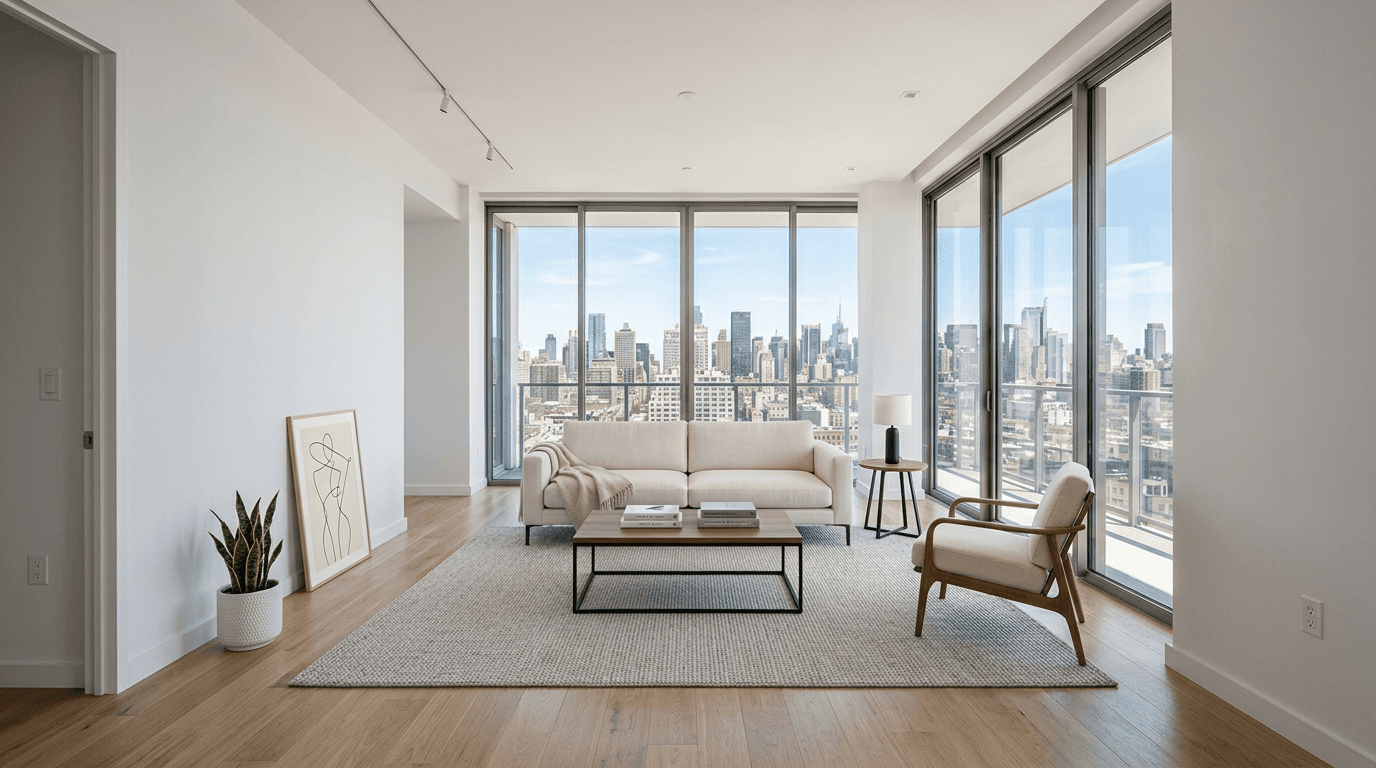
Virtual staging has become one of the most effective marketing tools for luxury multigenerational home teams because these properties are rarely sold on square footage alone; they are sold on how intelligently they solve complicated family living patterns without compromising elegance, privacy, or prestige. Builders and brokerages marketing high-end homes with dual suites, detached casitas, or private family wings face a distinct challenge in 2026: buyers may admire the finishes, but they often struggle to immediately understand who lives where, how independence is preserved, and whether the home truly supports aging parents, returning adult children, live-in help, or extended family guests at a luxury standard. Generic staging rarely answers those questions. Strategic virtual staging does. When used correctly, it transforms a complex floor plan into a clear visual story that communicates separation, flexibility, dignity, and aspirational family living. For marketing teams, the goal is not simply to make rooms look furnished; it is to remove confusion, segment use cases, and help affluent buyers see the property as a long-term lifestyle asset. This guide explains, step by step, how to use virtual staging to position luxury multigenerational homes with precision, credibility, and stronger buyer resonance.
According to recent staging metrics by the National Association of Realtors (NAR), professionally staged properties can significantly increase sales speed and perceived value, accelerating the impact for your specific niche.
Step 1: Define the multigenerational living narrative before any virtual staging begins
The most successful virtual staging campaigns for luxury multigenerational homes begin long before a designer adds furniture to a room. They start with a disciplined strategic decision about the story the property must tell. Marketing teams often make the mistake of staging these homes as if they were standard luxury residences, emphasizing beauty without fully interpreting function. In the multigenerational category, that approach leaves money on the table because buyers need help translating layout complexity into lived reality. Before commissioning any visuals, the builder or brokerage team should identify the most likely buyer personas for the home and map the property’s spaces to those audiences with intention. One scenario may center on affluent households caring for aging parents who need autonomy, quiet, and first-floor accessibility without feeling institutionalized. Another may focus on executive families who want a private casita for long-term guests, adult children, or household staff. Still another may appeal to blended families who need separation, retreat spaces, and dual gathering zones. Once those scenarios are clarified, every virtual staging decision becomes more effective because each room gains a defined purpose within a cohesive household narrative. This process also prevents inconsistent imagery across the listing, website, brochures, and social media campaigns. Instead of presenting a detached suite as a vague extra bedroom in one asset and a guest lounge in another, the marketing team can frame it consistently as a refined private residence within the home. In luxury marketing, clarity signals value. Buyers are not just evaluating whether the home is large enough; they are evaluating whether it respects privacy, hierarchy, hospitality, and longevity. A well-defined narrative gives virtual staging the strategic foundation needed to show that this is not merely a big house with extra rooms, but a sophisticated solution for modern family wealth, care, and independence.
Action Step
Document the top two buyer personas for the property and assign a clear lifestyle function to every secondary suite, wing, or casita before ordering any staged images.
Step 2: Stage each zone to visually communicate privacy, independence, and prestige
Once the household narrative is established, the next step is to stage the home by zones rather than by isolated rooms so that buyers immediately understand how privacy and connection coexist. In multigenerational luxury homes, the real selling point is often not the number of bedrooms but the quality of separation between them. Virtual staging should therefore reinforce boundaries, independence, and dignity while maintaining the home’s upscale visual identity. A private family wing should not look like an afterthought or overflow space; it should read as a deliberate, high-end retreat with its own emotional atmosphere. That means using differentiated furnishings, artwork, lighting cues, and layout choices that subtly signal who the space serves. For example, an aging-parent suite may benefit from elegant, tailored furnishings with easy circulation, serene textures, and understated sophistication that communicate comfort and autonomy without suggesting fragility. A detached casita might be staged as a polished guest residence or executive retreat, with a seating area, workspace, and hospitality accents that imply self-sufficiency. Meanwhile, the main family living spaces should feel cohesive, expansive, and socially magnetic, reinforcing that shared gathering remains central to the home’s lifestyle appeal. The key is contrast with continuity: each zone should feel distinct enough to imply privacy but refined enough to belong to the same luxury residence. This is particularly important in photo galleries and interactive tours, where buyers often scan quickly and make assumptions based on visual cues. If all rooms are staged identically, the home can feel confusing or generic. If each zone has a strong identity, the property becomes legible. Strong zoned staging also helps agents explain use cases during showings, because the visuals have already educated the buyer about how the home supports multiple generations without crowding, sacrificing status, or blurring personal boundaries.
Action Step
Create a zoning plan that assigns a distinct visual identity to the main residence, private suites, and any casita or independent wing while preserving a consistent luxury design language.
Step 3: Use virtual staging to solve floor plan confusion and make complex layouts easy to understand
Luxury multigenerational homes frequently suffer from a marketing gap that has little to do with quality and everything to do with comprehension. Even affluent buyers can become uncertain when a floor plan includes dual entrances, split-bedroom arrangements, semidetached quarters, bonus lounges, or separate kitchenettes. If the layout is not instantly understandable, buyers may undervalue the home or assume the configuration is awkward rather than intentional. Virtual staging should therefore be deployed as a floor plan interpretation tool, not simply a cosmetic enhancement. Every staged image should help the audience answer a practical question: who would use this area, how independently can they live here, and how does this connect to the rest of the residence? This is where staging strategy must work in tandem with listing copy, captions, floor plan labels, and tour sequencing. A sitting room outside a secondary suite, for example, should be staged in a way that unmistakably communicates a private lounge rather than an undefined extra space. A flex room near a separate entrance can be shown as a refined office or media retreat to illustrate how one wing functions almost like an attached residence. Even transitional spaces such as vestibules, shared courtyards, or hallways benefit from thoughtful staging because they visually explain degrees of separation. In 2026, when buyers often first encounter a home through mobile-first listing platforms, immersive tours, and social media reels, immediate visual clarity is a competitive advantage. Properties with complex multigenerational layouts need imagery that reduces cognitive effort and rewards the viewer with instant understanding. When done well, virtual staging turns architectural complexity into strategic desirability. It assures buyers that the home was designed for real-life household dynamics and that the layout supports both togetherness and retreat. That confidence can materially increase inquiry quality because prospects who engage are more likely to already understand the home’s intended value proposition.
Action Step
Audit the floor plan for confusing spaces and commission staged visuals that explicitly demonstrate the function and connectivity of every suite, flex room, and transition area.
Step 4: Align visual merchandising with luxury buyer psychology and multigenerational aspirations
Virtual staging for multigenerational luxury homes performs best when it addresses not only space planning but also aspiration, identity, and emotional reassurance. High-net-worth buyers are not simply purchasing additional bedrooms for practical reasons; they are often investing in a property that reflects family legacy, stewardship, hospitality, and future readiness. Marketing teams should therefore design staged scenes that tap into those deeper motivations without becoming theatrical or over-explained. The visual message should suggest that the home can gracefully accommodate changing family structures while preserving the elegance, discretion, and comfort expected at the luxury level. This requires careful merchandising choices. Furnishings should feel elevated and current, yet not so trend-driven that they narrow the buyer pool. Secondary suites should communicate parity of quality, showing that a parent, adult child, or long-term guest will enjoy a beautiful environment rather than a compromised one. Shared spaces should feel intentionally scaled for both intimate conversation and larger family moments, helping buyers imagine holidays, extended visits, and everyday coexistence without congestion. It is also wise to represent versatility subtly, showing how one area can support reading, wellness, remote work, or private hosting without cluttering the visual narrative. Importantly, the staging should avoid stereotypes. An aging-parent suite should never feel clinical or diminished, and family-oriented spaces should never sacrifice sophistication in pursuit of relatability. In luxury marketing, respect is communicated through design equality and refinement. The emotional impact of these choices is significant because buyers want proof that a multigenerational arrangement can enhance life rather than complicate it. Strong virtual staging reassures them that the home has already solved a delicate balance: everyone can belong, everyone can host, and everyone can retreat. That message resonates deeply with affluent households evaluating not just where they will live next, but how they will care for and gather with the people closest to them over time.
Action Step
Review every staged scene through the lens of luxury buyer psychology and ensure it conveys dignity, flexibility, and equal-quality living across all generations.
Step 5: Integrate virtual staging across the full marketing system for consistency, trust, and conversion
The final step is to treat virtual staging as a central marketing system rather than a one-off visual service. Many teams invest in excellent staged images but fail to carry that strategic clarity across all consumer touchpoints, weakening the overall impact. For luxury multigenerational listings, consistency is especially important because buyers are evaluating a nuanced value proposition that depends on trust and comprehension. The staged story told in photography should match the property website, email campaigns, social clips, printed collateral, agent talking points, digital ads, and showing experience. If one platform positions the casita as a guest residence, another as a home office, and another as an in-law retreat, the message fragments and the home becomes harder to interpret. Instead, marketing teams should establish a clear staging-based communications framework that identifies the name, purpose, and buyer benefit of each key zone, then repeat that framework everywhere. Interactive floor plans can mirror the staged uses. Listing descriptions can reference the same suite identities seen in imagery. Video tours can be scripted to walk buyers through privacy transitions and household scenarios in the same order established by the photo gallery. Sales teams should also be equipped to explain that the visuals are virtually staged while confidently reinforcing the lifestyle logic behind them. In 2026, buyers expect polished digital presentation, but they also reward coherence. When virtual staging is integrated with disciplined messaging, it does more than beautify the home; it educates the market, reduces objection points, improves lead quality, and shortens the time it takes for a prospect to recognize fit. In a category where layout complexity can otherwise delay decision-making, that alignment creates a measurable advantage for builders and brokerages competing for affluent, needs-specific buyers.
Action Step
Build a cross-channel messaging guide so the staged purpose of every multigenerational zone appears consistently in listing copy, tours, brochures, ads, and agent presentations.
Explore More Resources
Conclusion
Virtual staging is most powerful in luxury multigenerational marketing when it is used as a strategic interpretation tool rather than a decorative afterthought. For builders and brokerages selling homes with dual suites, casitas, or independent family wings, the challenge is not merely showcasing attractive interiors but making sophisticated living arrangements instantly understandable and desirable. By defining a clear buyer narrative, staging by privacy-focused zones, clarifying complex floor plans, aligning visuals with affluent family psychology, and carrying the same logic across every marketing channel, teams can turn potential confusion into confidence. The result is stronger storytelling, better-qualified inquiries, and a more compelling presentation of the home as a long-term solution for elegant, flexible family living.
Ready to Stage Your First Room?
Join thousands of top real estate professionals who use AI Virtual Staging to instantly transform vacant photos into fully-furnished masterpieces in under 20 seconds.
Start Staging For FreeFrequently Asked Questions
Why is virtual staging especially important for luxury multigenerational homes?
Because these homes often include complex layouts, private suites, casitas, or separate family wings that are not immediately intuitive in empty photos. Virtual staging helps buyers understand how the home supports independence, privacy, and shared living at the same time, which is central to the value of a multigenerational luxury property.
How should we stage an aging-parent suite without making it feel clinical or dated?
Use refined, upscale furnishings with generous circulation, calming textures, and sophisticated styling that communicates comfort and autonomy. The goal is to present the suite as a dignified private retreat equal in quality to the rest of the residence, not as a medically oriented space.
Should a detached casita always be staged as an in-law suite?
Not necessarily. The best use depends on the most likely buyer profile for the property. A detached casita may be staged as a guest residence, executive retreat, private office, or independent family suite, as long as the chosen use aligns with the broader marketing narrative and remains consistent across channels.
Can virtual staging help reduce buyer confusion about unusual floor plans?
Yes. When paired with clear captions, labeled floor plans, and intentional tour sequencing, virtual staging can interpret ambiguous spaces and show how each room functions within the household. This helps buyers quickly understand the logic of the layout and perceive complexity as purposeful design.
What is the biggest mistake marketing teams make with virtual staging for these homes?
The biggest mistake is treating virtual staging as generic decoration instead of strategic communication. When rooms are staged without a defined multigenerational narrative, the home may look attractive but fail to explain privacy, independence, and family use cases, which are often the key reasons buyers choose this property type.
Explore More Guides
Continue building your real estate expertise.
The Step-by-Step Guide to Virtual Staging for Senior Move Management Companies
Learn how senior move management companies can use virtual staging to transform dated, overfurnished homes into safer, cleaner, more marketable listings in 2026. This guide covers planning, photography, compliance, family communication, and listing optimization.
The Step-by-Step Guide to Virtual Staging for Luxury High-Rise Condo Listing Agents
An authoritative 2026 step-by-step guide for luxury high-rise condo listing agents on using virtual staging to elevate vacant units, attract premium buyers, justify higher commissions, and market urban high-rise listings with polished, conversion-focused visuals.
The Step-by-Step Guide to Virtual Staging for Golf Course Community Home Builders
Learn how golf course community home builders can use virtual staging to market spec homes and inventory models more effectively, connect with retirees and affluent buyers, and increase conversions in 2026.
The Step-by-Step Guide to Virtual Staging for Urban Micro-Apartment Developers
An authoritative 2026 step-by-step guide for urban micro-apartment developers on using virtual staging to market compact rentals, prove livability, highlight storage, and increase leasing confidence without misleading prospects.
The Step-by-Step Guide to Virtual Staging for Dental Practice Brokers
An authoritative 2026 step-by-step guide for dental practice brokers on using virtual staging to modernize dated operator-owned offices, improve buyer perception, and market treatment rooms, reception areas, and leasehold opportunities ethically and effectively.
The Step-by-Step Guide to Virtual Staging for Mobile Home Park Investors
An authoritative 2026 step-by-step guide for mobile home park investors on using virtual staging to improve listings, lease and sell homes faster, reduce vacancy drag, and create low-cost marketing assets across manufactured housing communities.