
The Step-by-Step Guide to Virtual Staging for Luxury Spec Home Marketing Agencies
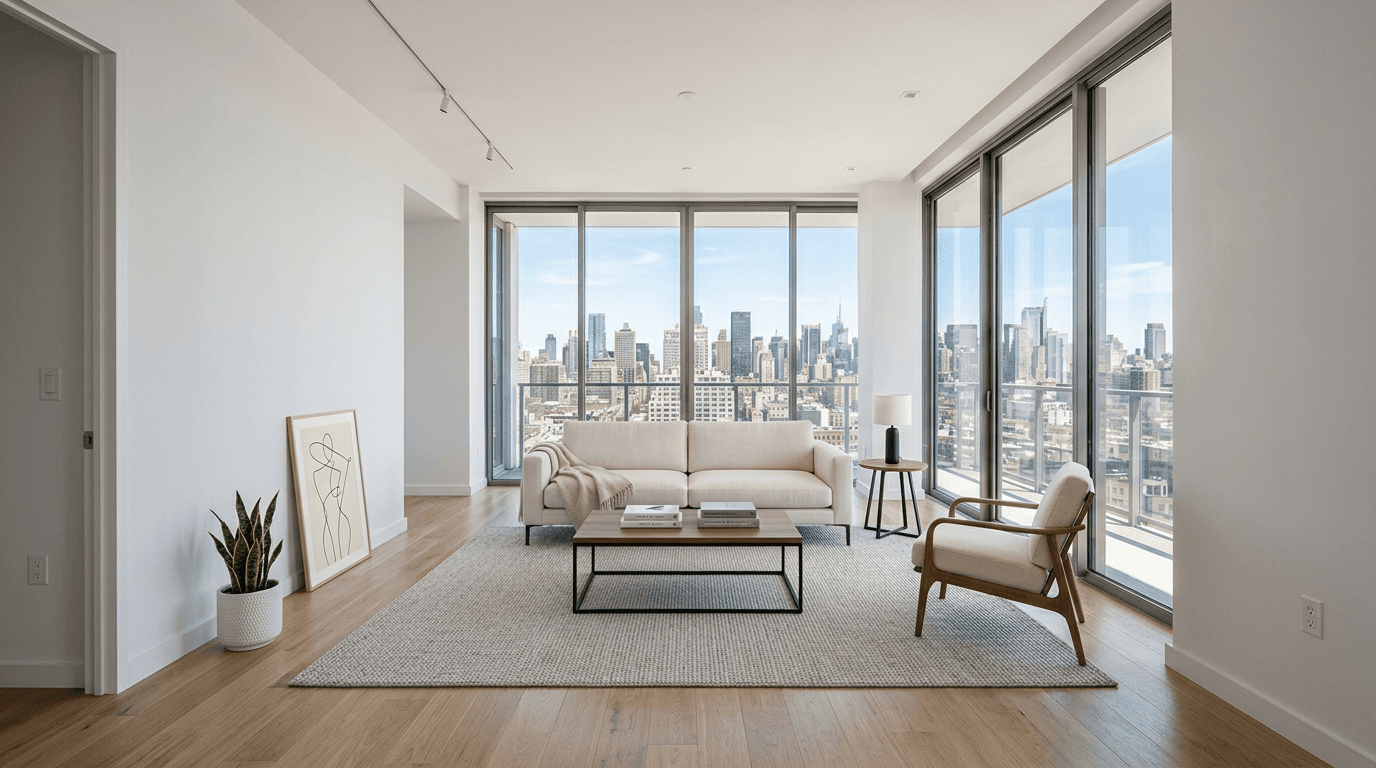
In the luxury spec home category, presentation is not a cosmetic detail; it is a pricing strategy, a velocity strategy, and often the deciding factor between a property that inspires immediate desire and one that quietly accumulates carrying costs month after month. Agencies and in-house teams responsible for marketing vacant multimillion-dollar speculative homes know the problem well: even architecturally exceptional residences can photograph as emotionally flat when rooms are empty, scale is hard to read online without furnishings, and affluent buyers who begin their search digitally often fail to form the aspirational connection required to justify a premium asking price. In 2026, virtual staging has evolved into one of the fastest, most controllable, and most cost-efficient ways to transform a cold, vacant shell into a compelling lifestyle narrative without the scheduling friction, logistics, and expense of traditional staging. For luxury spec home marketing agencies, the real opportunity is not simply to add furniture to photos, but to create strategic visual merchandising that clarifies room purpose, elevates perceived value, aligns with the intended buyer profile, and accelerates decisions before a showing even occurs. This guide breaks down exactly how to use virtual staging as a disciplined, high-end marketing system for luxury spec inventory so you can launch faster, market more convincingly, and reduce the costly gap between completion and sale.
According to recent staging metrics by the National Association of Realtors (NAR), professionally staged properties can significantly increase sales speed and perceived value, accelerating the impact for your specific niche.
Step 1: Start with market positioning before you stage a single image
The most successful virtual staging campaigns for luxury spec homes begin long before a rendering artist places a sofa in a great room. Agencies that treat virtual staging as mere decoration usually end up with generic, magazine-inspired visuals that look attractive but fail to support the sale strategy. Instead, the process must begin with precise market positioning. That means identifying who the likely buyer is, what lifestyle they are purchasing, and how the home’s design language should be interpreted visually to reinforce both. A modern desert estate aimed at a privacy-focused entrepreneur should not be staged the same way as a transitional waterfront home intended for a multigenerational family relocating from another luxury market. Before any images are produced, your team should define the home’s architectural story, the intended emotional response, the neighborhood context, the expected price anchor, and the target buyer’s functional priorities such as entertaining, wellness, remote work, guest hosting, or indoor-outdoor living. This strategic foundation matters because affluent buyers are not simply comparing square footage; they are comparing identity, status signaling, convenience, and imagined daily experience. The role of virtual staging is to make that experience instantly legible in listing photography, paid media creatives, landing pages, email campaigns, and investor reporting. A vacant room leaves too much interpretive work to the buyer, while a properly positioned staged image reduces ambiguity and directs attention toward the home’s strongest value drivers. When the visual strategy reflects the sales narrative, every image starts doing commercial work: the primary suite becomes a retreat, the club room becomes a hospitality feature, the terrace becomes an entertaining venue, and the office becomes an executive necessity. In a category where every month unsold can represent significant interest, tax, maintenance, and opportunity costs, that clarity is not aesthetic fluff; it is a revenue-protection tool.
Action Step
Create a one-page positioning brief for the property that defines target buyer, lifestyle narrative, architectural style, top selling features, and the emotional tone your virtual staging must communicate.
Step 2: Capture photography and source files that support premium-quality virtual staging
Virtual staging quality is determined as much by the input materials as by the artist’s talent, which is why luxury agencies must approach photography and file preparation with production-level rigor. If the base images are poorly lit, improperly exposed, shot at awkward angles, or inconsistent in vertical alignment, even sophisticated staging will struggle to look believable and premium. For multimillion-dollar spec homes, your photo capture process should be designed specifically with virtual staging in mind. Rooms should be photographed clean, fully construction-complete, and free from temporary items, packaging, cords, painter’s tape, or builder debris that can compromise realism once digital furnishings are added. Camera height, lens selection, and composition should preserve the architectural integrity of the space, especially in rooms where ceiling treatments, window lines, stone details, millwork, and custom lighting justify the home’s premium positioning. It is also essential to gather multiple angles for key spaces rather than relying on a single hero shot, because buyers increasingly scrutinize consistency across the image set, and one beautifully staged room image cannot compensate for visual uncertainty elsewhere. Agencies should also provide the staging team with floor plans, finish schedules, inspiration references, exterior imagery, and clear notes on fixed materials so furniture scale, styling palette, and accessory choices align with reality. Luxury buyers are particularly sensitive to visual dissonance; if the staging ignores the architecture or introduces furnishings that conflict with the home’s proportions and finishes, the result feels inauthentic and can subtly erode trust. In 2026, discerning audiences have seen enough listing media to notice when rugs float, shadows are wrong, art feels algorithmic, or furniture scale is implausible. High-end virtual staging therefore depends on precision photography, accurate dimensions, and a tightly managed source package. The more disciplined your visual production pipeline is at the beginning, the easier it becomes to create staged images that feel editorial, believable, and commercially persuasive rather than artificial.
Action Step
Build a luxury listing media checklist that requires construction-ready rooms, premium photography angles, accurate dimensions, floor plans, and design references before any virtual staging work begins.
Step 3: Design each staged scene to sell function, aspiration, and scale
Once positioning and source imagery are in place, the next step is to design staged scenes that do much more than fill empty space. In luxury spec home marketing, every staged image should answer three buyer questions simultaneously: what is this room for, how would life feel here, and how large or impressive is it in practical terms. Empty rooms often fail on all three counts. Buyers may admire the finishes but still struggle to interpret proportions, furniture layouts, or the intended use of secondary spaces, which weakens both emotional connection and perceived value. Strategic virtual staging solves this by giving shape to lifestyle possibilities while preserving the architecture as the hero. That means using furniture and decor selectively, with restraint, and in direct service of the home’s price point and target persona. In a dramatic double-height great room, the scene should communicate entertaining scale and visual sophistication without cluttering sightlines to the fireplace wall, custom glazing, or exterior views. In a flex room, the staging should remove doubt by presenting a crystal-clear use case such as a media lounge, executive office, wellness studio, or secondary guest suite depending on the buyer profile you established earlier. In primary bedrooms and spa baths, staging should amplify retreat, privacy, and indulgence while remaining proportionally credible to the room dimensions. The strongest agencies also think beyond individual rooms and stage for narrative continuity so the home feels cohesive from image to image. Material tones, styling language, and accessory density should support a unified brand story, not jump between trends. This coherence matters because affluent buyers evaluate luxury through signals of curation and intentionality. If the imagery feels overdesigned, trendy for trend’s sake, or disconnected from the architecture, the home can read as less timeless and therefore less valuable. Effective luxury virtual staging is ultimately about visual hierarchy: emphasize craftsmanship, reinforce lifestyle, demonstrate usability, and help buyers mentally move in before they ever book a private showing.
Action Step
Map every major room to a specific buyer-oriented purpose and approve staging concepts that clarify function, preserve architectural sightlines, and maintain a cohesive luxury aesthetic across the full image set.
Step 4: Deploy virtual staging across the full marketing funnel, not just the MLS gallery
A common mistake in spec home marketing is treating virtual staging as a single listing-photo enhancement rather than as a campaign asset that should influence the entire buyer journey. For luxury agencies, the highest return comes when staged imagery is deployed intentionally across every touchpoint where affluent prospects form impressions, compare options, and decide whether the home merits their time. The MLS is only one distribution channel. Your staged visuals should also power property websites, landing pages for paid social campaigns, high-end brochure design, email outreach to broker networks, retargeting ads, digital lookbooks for relocation clients, investor and developer update decks, and teaser campaigns prior to the first major open house or private launch. Different images should be selected for different funnel stages. Hero shots with strong emotional appeal are ideal for ad creative and social engagement, while function-explaining images help on property detail pages where buyers are evaluating fit. A visually staged office, gym, lounge, or guest suite can be especially powerful for overcoming objections in secondary spaces that may otherwise appear ambiguous in a vacant home. Agencies should also test the sequencing of staged versus unstaged imagery. In many cases, the best strategy is to lead with staged hero images to create desire, then include a limited number of unstaged or alternate views where needed to maintain transparency and show the quality of the architecture itself. In 2026, trust remains essential, so all virtual staging should be clearly disclosed according to platform rules and local regulations, but disclosure does not weaken performance when the imagery is tasteful and credible. In fact, sophisticated buyers generally appreciate staging when it helps them understand the home faster. Used correctly, virtual staging compresses the decision-making cycle by making digital impressions more memorable, improving click-through and inquiry quality, and increasing the likelihood that showing requests come from buyers already emotionally invested in the property.
Action Step
Create a channel-by-channel deployment plan that assigns specific staged images to MLS, website, ads, email, social, broker outreach, and developer reporting, with clear disclosure language where required.
Step 5: Measure performance, refine creative, and build a repeatable staging system for future inventory
Luxury spec home marketing agencies gain the greatest long-term advantage from virtual staging when they stop treating each listing as a one-off creative exercise and instead build a repeatable optimization system. Once the staged assets are live, your work is not finished; it enters the measurement phase. Track which visuals drive the strongest engagement signals, including click-through rates on advertising, dwell time on listing pages, inquiry conversion rates, save and share behavior, broker feedback, showing requests, and the quality of buyer conversations that follow. Pay close attention to whether certain staged room types consistently influence performance. For example, one market may respond especially well to staged indoor-outdoor entertaining scenes, while another may show stronger engagement when home offices, wellness spaces, or multigenerational guest accommodations are clearly depicted. Agencies should also compare campaign performance between homes launched with strategic virtual staging and those marketed with vacant photography or delayed physical staging. Over time, these benchmarks become powerful evidence for developers who need justification for faster creative approvals and marketing investment. Just as important is gathering qualitative insight from agents, buyers, and builders. Did the imagery align with what visitors felt in person? Were there spaces buyers understood better online because of the staging? Did any scenes create unrealistic expectations? The goal is to refine both realism and persuasion. As your team accumulates results, you can standardize approval workflows, preferred vendors, style libraries by architecture type, disclosure practices, launch timelines, and KPI dashboards. That operational maturity is especially valuable for agencies handling multiple spec properties across neighborhoods or price bands. In a market where speed to launch and speed to emotional connection directly affect carrying costs and margin protection, a documented virtual staging system becomes more than a creative service; it becomes a scalable competitive advantage that helps developers sell luxury inventory faster and more confidently.
Action Step
Set up a post-launch dashboard to measure engagement, inquiries, showing quality, and sale velocity by staged image type, then use the findings to create a repeatable virtual staging SOP for future luxury listings.
Explore More Resources
Conclusion
For luxury spec home marketing agencies, virtual staging is no longer a secondary enhancement reserved for difficult listings; it is a core strategy for translating vacant architecture into a desirable, legible, premium lifestyle product. When executed with clear positioning, high-quality source media, purposeful scene design, full-funnel deployment, and disciplined performance analysis, virtual staging helps agencies reduce ambiguity, elevate perceived value, and shorten the path from completion to contract. In the high-stakes world of multimillion-dollar speculative inventory, where every unsold month carries real financial consequences, the ability to launch polished aspirational imagery quickly is a meaningful commercial advantage. The agencies that win in 2026 will be the ones that use virtual staging not as decoration, but as a repeatable marketing system that turns empty rooms into compelling reasons to buy.
Ready to Stage Your First Room?
Join thousands of top real estate professionals who use AI Virtual Staging to instantly transform vacant photos into fully-furnished masterpieces in under 20 seconds.
Start Staging For FreeFrequently Asked Questions
Is virtual staging appropriate for multimillion-dollar luxury spec homes, or does it feel too artificial for high-end buyers?
Yes, virtual staging is highly appropriate for luxury spec homes when it is executed with architectural sensitivity, realistic proportions, and a clear understanding of the target buyer. High-end buyers are not inherently opposed to digital staging; they are opposed to poor-quality imagery that feels misleading or generic. In fact, many affluent buyers appreciate staged visuals because they help interpret large vacant spaces, understand room function, and imagine how the home supports their lifestyle. The key is to use premium-quality rendering, restrained styling, and clear disclosure so the staging enhances trust instead of undermining it.
How does virtual staging compare with physical staging for luxury spec home marketing?
Virtual staging is usually faster, more flexible, and more cost-efficient than physical staging, especially for developers and agencies managing multiple vacant homes or compressed launch timelines. It allows teams to test different design directions, stage multiple room types, and produce polished marketing materials without waiting for furniture procurement, installation scheduling, or site coordination. Physical staging can still be valuable for select showings, model homes, or ultra-premium experiential campaigns, but virtual staging often delivers stronger speed-to-market and better ROI for digital-first buyer acquisition, particularly in the early phases of launch.
What rooms should luxury agencies prioritize when virtually staging a spec home?
Priority should go to the spaces that most strongly influence emotional response, clarify scale, and remove functional uncertainty. In most luxury spec homes, that includes the great room, kitchen-adjacent living areas, primary suite, dining area, outdoor entertaining spaces, and any ambiguous flex rooms such as offices, media rooms, gyms, or guest suites. The exact priority depends on the buyer profile and property positioning. The objective is to ensure that your staged images explain the home’s most valuable lifestyle benefits quickly and convincingly rather than attempting to stage every single room without strategic purpose.
Should agencies disclose that listing photos are virtually staged?
Absolutely. Agencies should disclose virtual staging clearly and consistently in accordance with MLS rules, advertising standards, and local regulations. Disclosure protects trust, reduces confusion, and demonstrates professionalism. Transparent disclosure does not diminish the effectiveness of strong virtual staging; if anything, it can increase credibility because buyers understand that the images are intended to illustrate potential room use rather than misrepresent the property. The best practice is to use tasteful disclosure language while ensuring the staged scenes remain realistic and faithful to the home’s actual layout and finishes.
How quickly can virtual staging be implemented for a newly completed spec home in 2026?
In many cases, virtual staging can be implemented within days once the home is photo-ready and the agency has organized the necessary source materials, such as high-quality photography, floor plans, room dimensions, and design direction. Timelines vary by vendor complexity, revision cycles, and the number of rooms being staged, but virtual staging is generally far faster than coordinating full physical staging for a large luxury property. For agencies under pressure to reduce carrying costs and launch immediately after completion, this speed is one of virtual staging’s biggest advantages, particularly when supported by a standardized workflow and preapproved creative strategy.
Explore More Guides
Continue building your real estate expertise.
The Step-by-Step Guide to Virtual Staging for Luxury Student Condo Developers
An authoritative 2026 step-by-step guide for luxury student condo developers on using virtual staging to pre-sell premium university-adjacent units, attract affluent students and parents, and position condo projects as sophisticated, practical lifestyle investments.
The Step-by-Step Guide to Virtual Staging for Scattered-Site Affordable Housing Lease-Up Teams
An authoritative step-by-step guide for scattered-site affordable housing lease-up teams on using virtual staging to standardize marketing, build applicant trust, improve listing consistency, and streamline leasing workflows across dispersed inventories in 2026.
The Step-by-Step Guide to Virtual Staging for Downtown Office-to-Residential Conversion Developers
An authoritative 2026 step-by-step guide for downtown office-to-residential conversion developers on using virtual staging to overcome buyer skepticism, visualize residential layouts, accelerate pre-sales, and market adaptive reuse projects effectively.
The Step-by-Step Guide to Virtual Staging for Surplus Religious Housing Conversion Developers
An authoritative 2026 step-by-step guide for developers using virtual staging to market converted convents, rectories, monasteries, and church-owned housing, helping buyers visualize modern livability while preserving historic character.
The Step-by-Step Guide to Virtual Staging for Lease-to-Own Home Program Operators
An authoritative 2026 step-by-step guide for lease-to-own and rent-to-own home program operators on using virtual staging to market vacant inventory, increase engagement, and help aspiring buyers envision long-term ownership from day one.
The Step-by-Step Guide to Virtual Staging for Military Housing Privatization Marketing Teams
An authoritative 2026 step-by-step guide for military housing privatization marketing teams on using virtual staging to reduce vacancy, build trust with military families, differentiate standardized units, and improve leasing performance for on-base and near-base housing.