
The Step-by-Step Guide to Virtual Staging for New Construction Infill Townhome Marketers
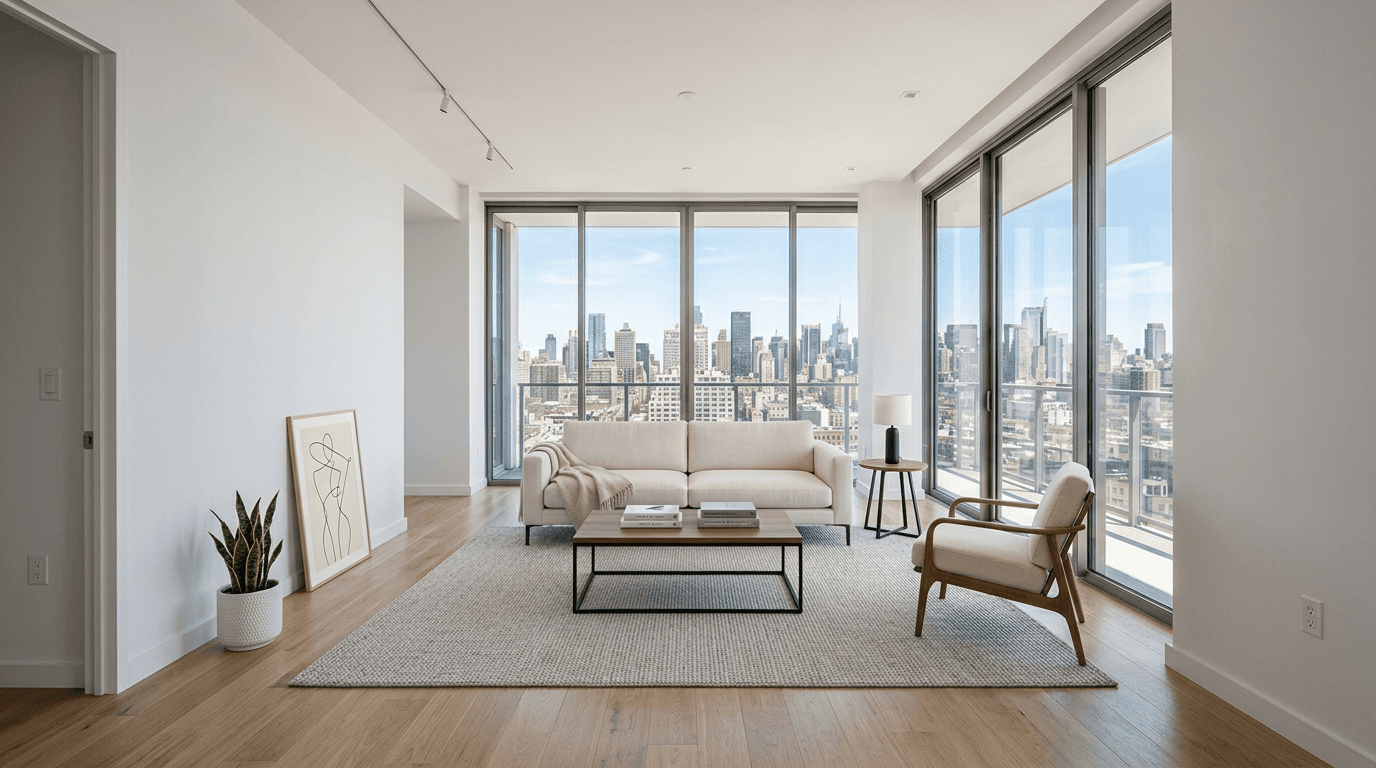
Virtual staging has become one of the most effective marketing tools for new construction infill townhome and brownstone projects because it solves the exact problems that slow presales: unfinished interiors feel abstract, narrow multi-level layouts are difficult to read in raw photography or plan sheets, and buyers often struggle to understand how modern city living actually fits inside a vertical urban home. For developers, sales teams, and marketing agencies, that gap between architectural intent and buyer perception can directly affect absorption rate, lead quality, and pricing confidence. In 2026, the strongest infill marketers are no longer relying on floor plans, blank shell photography, and generic renderings alone. They are using strategic virtual staging to translate square footage into lifestyle, circulation into usability, and empty rooms into emotionally persuasive spaces that reflect how target buyers want to live. When executed correctly, virtual staging does far more than decorate a room. It clarifies scale in compact footprints, highlights storage and work-from-home flexibility, softens awkward sightlines common in narrow homes, and creates a consistent visual story across MLS, paid ads, landing pages, brochures, and sales center presentations. This guide explains exactly how to use virtual staging step by step so your project looks premium, feels believable, and converts urban buyers before every unit is physically complete.
According to recent staging metrics by the National Association of Realtors (NAR), professionally staged properties can significantly increase sales speed and perceived value, accelerating the impact for your specific niche.
Step 1: Define the buyer profile and lifestyle story before staging a single image
The most effective virtual staging for new construction infill townhomes begins long before furniture is placed into a rendering or an empty room photo. It starts with a precise understanding of who the likely buyer is, what urban lifestyle they aspire to, and which design cues will make the home feel immediately relevant to them. Too many projects stage units generically, using fashionable but disconnected decor that looks attractive without helping the buyer imagine daily life in a narrow, vertical layout. For an infill townhome development, that is a costly mistake, because these homes are typically purchased not just for shelter but for a particular city-centered identity that blends walkability, efficiency, status, flexibility, and design-forward living. A first-time professional couple moving from an apartment will respond differently than a downsizing suburban owner seeking low-maintenance luxury, and both will interpret room size, functionality, and storage very differently. Your virtual staging strategy should therefore be anchored to a buyer persona that includes income profile, commuting habits, family structure, entertainment style, work-from-home needs, pet ownership, and expectations around finishes and furnishing style. Once that persona is clear, build a visual narrative for the entire residence, not just isolated rooms. The kitchen should suggest how they host friends before heading out to a restaurant district, the flex room should illustrate either a polished home office or a nursery depending on target demand, and the rooftop or terrace should reflect the realistic way your audience uses outdoor urban space. When marketers define this story upfront, staging choices become more cohesive and persuasive, and every image works harder to reduce imagination gaps that often stall presale decisions.
Action Step
Create one primary and one secondary buyer persona, then write a short lifestyle brief that defines how each room should support their urban living habits before any staging begins.
Step 2: Select the right rooms, angles, and source imagery to solve layout confusion
Infill townhomes present a unique visual challenge because their value often lies in clever vertical organization rather than broad, instantly legible floor plates. That means your source imagery must be chosen with exceptional care. Virtual staging cannot rescue weak angles that compress the room, distort proportions, or fail to communicate how one space flows into the next. Before commissioning staging, evaluate which images actually answer buyer questions. In narrow townhomes, prospects often want to know whether the living room can hold a real sofa without blocking circulation, whether a dining area feels practical rather than symbolic, whether a secondary bedroom can function beyond a bed drop, and whether lower-level or entry-level flex spaces have real purpose. Your photography, architectural renderings, or CGI views should therefore prioritize angles that reveal depth, window placement, stair adjacency, and furniture pathways. Wide-angle imagery should be used carefully so spaces feel open without becoming misleading, because credibility matters enormously in presale marketing where trust must be built before physical completion. It is also wise to think in sequences rather than standalone hero shots. A buyer should be able to move visually from exterior frontage to entry, from kitchen to living zone, and from primary suite to bath in a way that explains the home’s logic. If the development is still under construction, combine plan-based render views with staged elevations and perspective images that show realistic scale. If units are near completion, capture empty shell photography under consistent lighting so staging appears natural and premium. The goal is not simply to produce attractive images, but to use camera strategy and image selection as a way to remove uncertainty from compact, multi-floor urban housing, where misunderstanding the layout can quickly weaken buyer enthusiasm.
Action Step
Audit your current visuals and shortlist the 8 to 12 images or render views that best explain room scale, circulation, and function in your townhome layout.
Step 3: Stage for scale, function, and credibility rather than decoration alone
The highest-performing virtual staging for brownstones and infill townhomes is not the most glamorous; it is the most believable, spatially intelligent, and conversion-oriented. In compact urban homes, every furnishing decision communicates something about usability. Oversized sectionals can make a living room appear cramped, while underscaled pieces can create an unrealistic impression that the room is larger than it truly is. The same principle applies to dining tables, bed sizes, bar stools, desks, and accent furniture. Effective staging should demonstrate that real people can live comfortably in the space without making the room feel crowded or theatrically sparse. This is especially important for presold-from-plan product, where the buyer is already taking a leap of faith. To reduce resistance, the furniture plan should mirror realistic dimensions, circulation clearances, and likely use patterns for the intended buyer. A secondary bedroom might be staged as a true guest room with a compact queen and nightstand if that reflects market demand, but in some urban infill projects it may perform better as a highly polished office with built-in shelving cues, especially if remote or hybrid work remains a strong buyer driver in 2026. Similarly, lower-level rooms, lofts, or top-floor landings should never be left visually ambiguous if they are critical to value perception. Material styling matters too: decor should complement the actual finish palette and architectural tone of the project, whether that means warm contemporary minimalism, elevated industrial, or classic modern brownstone refinement. Above all, avoid exaggerated luxury cues that overpromise what the physical unit cannot deliver. Thoughtful virtual staging builds trust because it helps prospects understand what fits, how they would move, and how the home supports daily life, making the property feel both aspirational and attainable at the same time.
Action Step
Review each staged room and confirm that every furniture piece supports realistic scale, clear circulation, and a functional use case aligned with your target buyer.
Step 4: Build a multi-channel marketing system around the staged visuals
Virtual staging creates the most value when it is treated as a campaign asset system rather than a one-time listing enhancement. For new construction infill townhome marketers, the same staged visual should be adapted deliberately for every buyer touchpoint, because urban prospects often encounter the project multiple times across channels before they inquire or reserve. On your website and landing pages, staged hero images should lead with the strongest lifestyle promise of the development, such as a sunlit kitchen-living level designed for entertaining or a serene primary suite that counters assumptions about city-home tightness. On MLS and portal listings, the sequence of staged and unstaged images should be planned to establish trust while also helping prospects understand use and scale. In paid social and display advertising, tightly cropped derivatives can emphasize the emotional benefits buyers want most, including work-from-home elegance, family flexibility, rooftop entertaining, or lock-and-leave sophistication. Email campaigns can segment imagery by audience, with investors seeing low-maintenance, high-demand layouts while owner-occupants receive more lifestyle-rich narratives. Sales centers and pitch decks should incorporate the same visual language so prospects experience continuity between online discovery and in-person engagement. This consistency strengthens brand perception and reduces friction caused by mismatched marketing materials. Just as importantly, your staged images should be paired with copy that interprets what the buyer is seeing. Instead of merely labeling a room, explain the value: a flex level becomes a private office or fitness retreat, a narrow dining zone becomes a comfortable six-seat gathering space, and an upper landing becomes a practical reading niche or homework station. When visual strategy and messaging are unified across every platform, virtual staging stops being a cosmetic add-on and becomes a structured sales tool that shortens the path from curiosity to confidence.
Action Step
Repurpose your staged visuals into a channel-specific package for website, MLS, social ads, email, brochures, and sales presentations with messaging tailored to each audience.
Step 5: Measure performance, refine staging choices, and use insights to accelerate absorption
The final step in using virtual staging effectively is treating it as a measurable optimization lever rather than a finished creative deliverable. Too often, developers and sales teams approve staged images, launch them, and then move on without analyzing which visuals actually influenced engagement, tours, reservations, or objections raised during the sales process. In a competitive 2026 market, that leaves valuable insight on the table. Your team should track how prospects interact with specific staged layouts across digital channels, including click-through rates on ads, time on page for gallery sequences, lead form conversion by featured image set, and the qualitative feedback sales agents hear during appointments. If buyers repeatedly comment on uncertainty around a lower-level suite, office nook, or rooftop configuration, that indicates an opportunity to revise the staging or add supplemental views that clarify utility. If one visual consistently drives inquiries, unpack why. It may be revealing the strongest emotional trigger in the project, such as a particularly efficient great room layout or a luxurious primary retreat that elevates perceived value. Virtual staging can also support pricing and release strategy. If certain unit types struggle, revised staging may help reposition an awkward room as flexible, family-friendly, or investment-practical. Conversely, if premium units convert quickly with a distinct design language, that style may offer clues for the remaining inventory. The best marketers run staged creative almost like product-market-fit testing: they compare narratives, room uses, and visual emphasis to understand what resonates most with the intended audience. Over time, these insights improve not only current campaigns but future developments as well, giving your organization a stronger playbook for visualizing urban infill housing in ways that move buyers from skepticism to action more efficiently.
Action Step
Set up a monthly review of staging performance using listing engagement, ad metrics, lead conversion data, and buyer feedback to refine visuals for unsold inventory.
Explore More Resources
Conclusion
For new construction infill townhome marketers, virtual staging is no longer just a way to make empty rooms look attractive; it is a strategic tool for translating complex urban layouts into clear, desirable, and emotionally resonant homes that buyers can understand before completion. When you begin with a defined buyer persona, choose imagery that explains circulation and scale, stage rooms for credible daily use, distribute visuals consistently across every marketing channel, and continuously refine the approach based on performance data, virtual staging becomes a direct contributor to stronger presales and faster absorption. In a category where buyers often need help imagining how narrow, vertical homes truly live, the teams that stage with purpose will outperform the teams that merely decorate.
Ready to Stage Your First Room?
Join thousands of top real estate professionals who use AI Virtual Staging to instantly transform vacant photos into fully-furnished masterpieces in under 20 seconds.
Start Staging For FreeFrequently Asked Questions
Why is virtual staging especially important for new construction infill townhomes?
Because these homes are often sold before completion and feature vertical, narrower layouts that can be difficult for buyers to interpret from floor plans or raw construction photos. Virtual staging helps prospects understand scale, circulation, room function, and lifestyle potential, which reduces hesitation and improves confidence during presales.
Should developers use virtual staging even if they already have architectural renderings?
Yes. Architectural renderings communicate design intent, but virtual staging adds lived-in context that helps buyers judge practicality. It shows what furniture fits, how a room may be used, and how an urban lifestyle can unfold in the space, making the home feel more tangible and emotionally persuasive.
Which rooms should be prioritized for virtual staging in a townhome project?
Start with the spaces that most influence value perception and buying confidence: the kitchen-living level, primary bedroom, a secondary bedroom or office-flex room, and any uniquely challenging area such as a lower level, rooftop room, or narrow dining zone. Prioritize spaces where buyers are most likely to question functionality or scale.
How realistic should virtual staging be for presale marketing?
It should be highly realistic and aligned with the actual dimensions, finish level, and target buyer profile of the unit. Overstaging with oversized luxury cues or misleading scale can damage trust, especially when buyers later compare the completed home to the marketing imagery. Credibility consistently outperforms exaggeration.
Can virtual staging improve marketing performance across channels beyond the MLS?
Absolutely. The same staged assets can support websites, landing pages, paid social campaigns, email nurturing, brochures, pitch decks, and sales center displays. When used consistently, staged imagery creates a unified project story that strengthens brand perception and helps prospects move more smoothly from first impression to inquiry and reservation.
Explore More Guides
Continue building your real estate expertise.
The Step-by-Step Guide to Virtual Staging for Luxury Desert Retreat Villa Marketing Teams
An authoritative 2026 step-by-step guide for luxury desert retreat villa marketing teams on using virtual staging to overcome harsh desert light, showcase indoor-outdoor living, and create premium visuals that support top-tier pricing.
The Step-by-Step Guide to Virtual Staging for Senior Apartment Lease-Up Marketing Teams
An authoritative step-by-step guide for senior apartment lease-up marketing teams on using virtual staging to accelerate pre-leasing, help 55+ prospects visualize downsized living, and differentiate online listings in 2026.
The Step-by-Step Guide to Virtual Staging for Senior Cohousing Community Developers
An authoritative 2026 step-by-step guide for senior cohousing community developers on using virtual staging to pre-sell cohousing, communicate shared amenities and private residences, reduce buyer skepticism, and differentiate from traditional 55+ communities.
The Step-by-Step Guide to Virtual Staging for Yacht Club Residence Developers
An authoritative 2026 step-by-step guide for yacht club residence developers using virtual staging to market marina-adjacent homes, elevate waterfront branding, and convert affluent lifestyle buyers.
The Step-by-Step Guide to Virtual Staging for Married Student Housing Operators
An authoritative 2026 step-by-step guide for married student housing operators on using virtual staging to market graduate and family-oriented units, communicate comfort and practicality, and improve leasing performance.
The Step-by-Step Guide to Virtual Staging for Destination Wedding Venue Estate Owners
An authoritative step-by-step guide for destination wedding venue estate owners on using virtual staging to transform generic residential rooms into premium, bookable wedding experiences, increase perceived value, and support higher event pricing in 2026.