
The Step-by-Step Guide to Virtual Staging for Downtown Office-to-Residential Conversion Developers
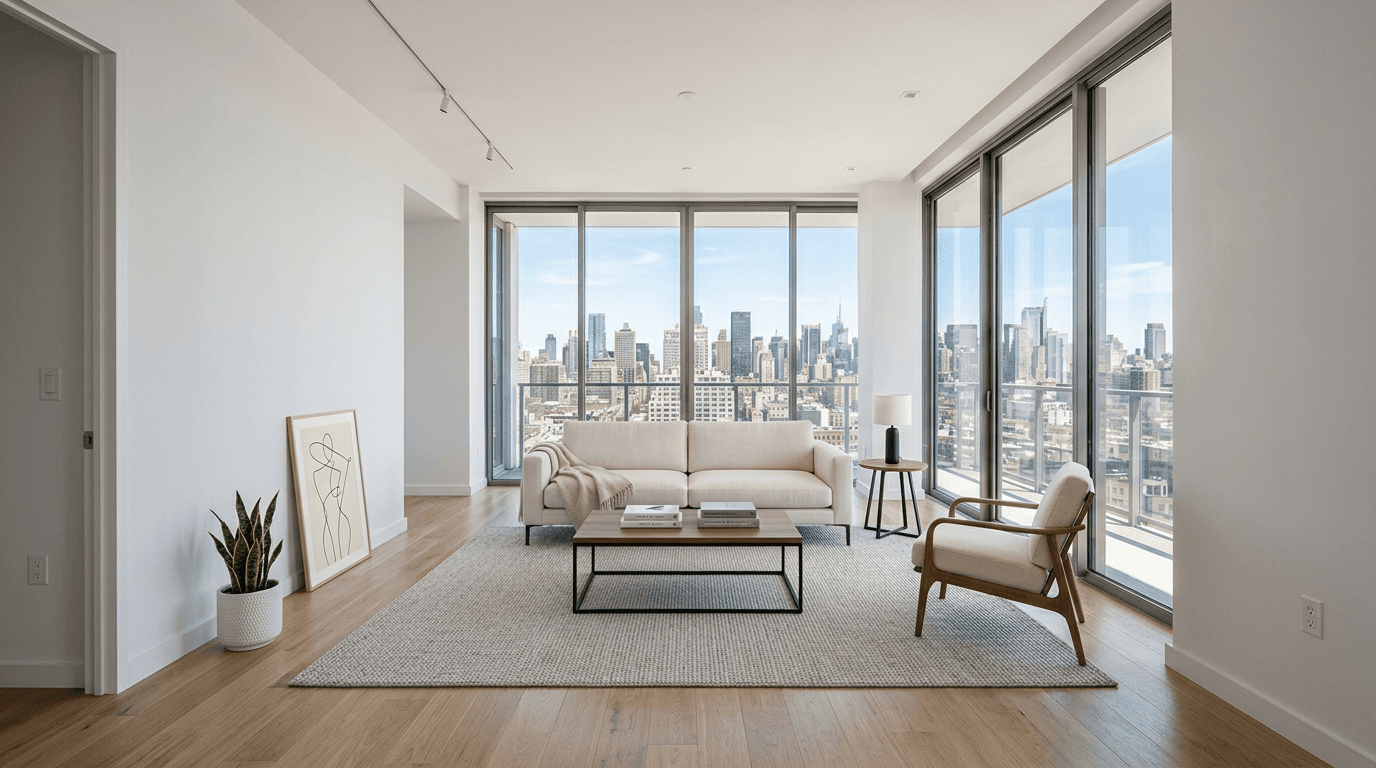
Virtual staging has become one of the most powerful sales and leasing tools available to downtown office-to-residential conversion developers in 2026 because it solves the exact problem that stalls conversion momentum: most prospects, investors, and even brokers struggle to emotionally connect with an obsolete office floor plate and imagine it as a desirable home. In urban cores, where adaptive reuse economics depend on market confidence, absorption velocity, and credible pre-sale storytelling, blank concrete, legacy curtain walls, deep floor plates, and former tenant corridors rarely communicate comfort, lifestyle, or value on their own. Developers repurposing aging office towers into apartments or condominiums need more than technical plans and construction updates; they need persuasive visual narratives that translate entitlement progress and design intent into spaces people can instantly understand, trust, and want to buy or lease. A disciplined virtual staging strategy does exactly that by turning skepticism into clarity, uncertainty into aspiration, and hard-to-read conversion layouts into compelling residential experiences tailored to specific buyer segments. The guide below outlines a practical, developer-focused process for using virtual staging not as cosmetic decoration, but as a strategic marketing system that supports financing conversations, pre-leasing, pre-sales, broker outreach, and brand positioning for complex urban conversion projects.
According to recent staging metrics by the National Association of Realtors (NAR), professionally staged properties can significantly increase sales speed and perceived value, accelerating the impact for your specific niche.
Step 1: Start with a market-positioning strategy before you stage a single unit
The most effective virtual staging campaigns for office-to-residential conversions begin long before any furniture is added to an image, because the real objective is not to decorate a room but to communicate a product-market fit that makes a formerly commercial building feel purpose-built for modern urban living. Downtown conversion developers should first define exactly who the project is for, what objections those prospects are likely to have, and which aspects of the conversion most need visual proof. A studio product aimed at young professionals returning to the city requires a very different visual narrative than a premium condominium targeting downsizers, investor-buyers, or dual-income households seeking walkable amenities. In conversion projects, this strategic framing matters even more because prospects often carry assumptions about awkward layouts, limited natural light, insufficient storage, or a lingering “office feel” that can suppress pricing power and slow pre-sales. By identifying your buyer or renter personas, your amenity hierarchy, and your signature design differentiators at the outset, you can instruct your staging team to emphasize the exact features that neutralize skepticism, such as defined sleeping zones, warm materials, wellness-oriented living areas, functional dining spaces, work-from-home flexibility, and views that reinforce downtown lifestyle value. This strategic foundation should also align with your broader brand story, whether the asset is being presented as a boutique adaptive reuse residence, a design-forward urban condominium, or a professionally managed rental community. When virtual staging is built on positioning rather than aesthetics alone, each image becomes a targeted persuasion asset that supports absorption, strengthens broker confidence, and gives the market a coherent explanation for why this former office tower is now a highly desirable place to live.
Action Step
Define your top 2 to 3 target resident or buyer profiles and create a staging brief that lists their likely objections, desired lifestyle cues, and the project features each image must communicate.
Step 2: Select the right spaces, viewpoints, and floor plan moments to visualize
In office-to-residential conversion marketing, choosing what to stage is often more important than how to stage it, because every rendered or virtually staged image should answer a specific question in the mind of the prospect. Developers frequently make the mistake of staging only the most photogenic units or the easiest rooms, when the better approach is to prioritize moments that clarify livability inside a building type many people still associate with cubicles, conference rooms, and repetitive corridors. The most valuable scenes usually include the living room to kitchen relationship, the bedroom zone in more compact layouts, any work-from-home niche that demonstrates post-pandemic residential practicality, bathrooms where hospitality-inspired finishes can elevate perceived quality, and shared amenity areas that prove the building offers a genuine residential ecosystem rather than just converted square footage. In towers with challenging floor plates, corner units, setbacks, and window lines should be selected intentionally to show how design has addressed daylight, privacy, circulation, and furniture placement. Developers should also think beyond static listing photography and map visuals to the buyer journey: one image may be designed to stop a scrolling prospect on a portal, another to help a broker explain a floor plan, another to reassure a lender or equity partner that the design reads as premium housing, and another to support pre-sales presentations or leasing center displays. Camera angle selection is critical here, because poor viewpoints can accidentally reinforce the exact concerns you are trying to overcome, such as excessive depth, narrowness, or ambiguity about room function. The strongest virtual staging program therefore starts with a deliberate shot list tied to unit mix, sales priorities, and recurring objections, ensuring every image earns its place in the marketing funnel and increases confidence in the conversion’s residential usability.
Action Step
Build a prioritized shot list of units and spaces that answers the top livability questions prospects will have, and assign each image a specific marketing purpose such as pre-sales, leasing, broker education, or investor presentations.
Step 3: Use virtual staging to solve conversion-specific objections, not just beautify interiors
For downtown adaptive reuse projects, virtual staging performs at its highest value when it directly addresses the psychological friction unique to former office buildings, because prospects are not just evaluating finishes and furniture style; they are asking whether the space will actually feel like home. That means your staging must deliberately interpret architectural realities that can otherwise be misread, including deep floor plates, structural columns, unusual window spacing, bulkheads, exposed systems, and footprints that differ from conventional ground-up residential design. A sophisticated staging strategy can show how a long former office bay becomes an inviting living-dining sequence, how a partial wall or millwork feature creates bedroom privacy, how layered lighting and textures warm up concrete or steel conditions, and how scale-appropriate furnishings make a room feel functional rather than compromised. Instead of hiding every conversion characteristic, many developers benefit from embracing the building’s industrial or architectural legacy while pairing it with unmistakably residential cues such as soft textiles, curated dining settings, bedside lighting, wellness corners, art, greenery, and family or entertaining moments that signal everyday life. It is also essential to avoid over-staging in ways that create mistrust; if the visual feels too idealized or impossible relative to the actual floor plan, prospects may perceive the entire project as marketing-driven rather than credible. The best results come from a collaboration among architects, interior designers, marketers, and staging specialists who understand where realism must be preserved and where imagination should be used to unlock emotional resonance. When done correctly, virtual staging becomes a conversion translation tool: it takes spaces people would otherwise judge through a commercial lens and reframes them as comfortable, aspirational, and practical residences that support pricing, reduce hesitation, and improve the effectiveness of every downstream sales conversation.
Action Step
Review your most difficult unit layouts and instruct your staging team to visually resolve specific concerns such as light, privacy, circulation, storage, and room identity using realistic furniture plans and residential design cues.
Step 4: Integrate virtually staged imagery across the full sales, leasing, and capital stack
Many developers underuse virtual staging by confining it to listing photography or a few website images, when in reality the greatest return comes from deploying those visuals across every audience that needs to believe in the future-state success of the conversion. In a downtown office-to-residential project, the same core set of staged images can be adapted for teaser campaigns, broker memoranda, pre-leasing sites, condominium reservation campaigns, investor decks, lender updates, signage, digital ads, social content, email nurture sequences, and sales gallery presentations. This matters because conversion projects rarely succeed on passive demand alone; they require repeated, coherent market education that explains not only what the units will look like, but why the building’s new identity makes sense within the urban core. Virtually staged visuals should therefore be paired with floor plans, neighborhood positioning, amenity messaging, and construction milestone communications so prospects can connect imagination with credibility. For example, a staged corner residence image becomes more persuasive when it is shown alongside actual view corridors, a measured plan, and a short caption explaining how the original structure enabled oversized windows or distinctive ceiling heights. Likewise, leasing teams and sales agents should be trained to use staged imagery as a consultative tool, not just a brochure asset, guiding prospects through how each layout supports entertaining, remote work, family routines, or lock-and-leave city living. Even capital partners benefit from this approach because strong visual narratives help demonstrate market readiness, design coherence, and revenue potential. By integrating virtual staging throughout the full communication ecosystem, developers convert isolated images into a strategic demand-generation engine that builds confidence across consumers, intermediaries, and financial stakeholders alike.
Action Step
Audit every place your project is presented—from website to broker decks to investor materials—and embed virtually staged visuals wherever they can improve comprehension, confidence, and conversion.
Step 5: Measure performance, refine creative, and keep visuals aligned with delivery reality
A high-performing virtual staging strategy is never a one-time creative exercise; it is an iterative marketing system that should be measured, refined, and governed with the same discipline developers apply to underwriting, design management, and leasing execution. Once virtually staged images are in the market, teams should track how different visuals influence click-through rates, inquiry volume, time on page, broker engagement, reservation interest, leasing tour conversion, and even the types of questions prospects ask after viewing materials. These data points reveal which images are successfully reducing uncertainty and which may still leave important aspects of the conversion unclear. For instance, if prospects consistently ask whether a staged den is actually large enough for a bed, or whether a living area receives enough daylight, that signals a need for alternate viewpoints, stronger plan overlays, or more transparent explanatory captions. Refinement should also occur as the project progresses from concept through construction, because staging visuals must stay aligned with approved finishes, fixture packages, amenity programming, and any design modifications introduced through value engineering or code-driven changes. In 2026, credibility is a competitive advantage, and buyers and renters are increasingly alert to visual marketing that promises more than the delivered product can support. Developers who maintain a tight approval workflow among development, architecture, interior design, legal, and marketing teams can ensure that staged representations remain both inspiring and defensible. Over time, this performance-and-governance mindset transforms virtual staging from an attractive creative output into a scalable operating asset that improves messaging precision, strengthens trust, and supports more efficient sellout or lease-up in a category where market education is essential.
Action Step
Set up a monthly review process to compare image performance, prospect feedback, and current design documents so your virtual staging remains persuasive, accurate, and optimized for conversion.
Explore More Resources
Conclusion
For downtown office-to-residential conversion developers, virtual staging is far more than a cosmetic marketing enhancement; it is a strategic bridge between an obsolete commercial past and a credible, desirable residential future. When grounded in market positioning, built around the right spaces and viewpoints, tailored to solve conversion-specific objections, distributed across the full marketing and capital stack, and continuously refined based on performance and delivery reality, virtual staging helps prospects see what plans alone cannot communicate. In a category where skepticism can suppress absorption and delay momentum, compelling future-state visuals create clarity, trust, and emotional connection at exactly the moments that matter most for pre-sales, pre-leasing, and investor confidence. Developers who approach virtual staging with discipline and intention will be better positioned to accelerate demand, strengthen pricing narratives, and present adaptive reuse not as a compromise, but as one of the most compelling residential stories in the urban core.
Ready to Stage Your First Room?
Join thousands of top real estate professionals who use AI Virtual Staging to instantly transform vacant photos into fully-furnished masterpieces in under 20 seconds.
Start Staging For FreeFrequently Asked Questions
Why is virtual staging especially important for office-to-residential conversions compared with ground-up multifamily projects?
Because former office buildings often contain layouts, window conditions, and spatial cues that prospects do not naturally interpret as residential, virtual staging plays a crucial role in translating technical design intent into an emotionally legible living environment. Ground-up residential projects usually benefit from familiar unit planning conventions, while conversions must overcome skepticism about comfort, light, privacy, and practicality.
Can virtual staging help with pre-sales or pre-leasing before construction is complete?
Yes. In fact, that is one of its strongest uses. Virtual staging allows developers to market the future-state residential product before model units are physically available, helping buyers, renters, brokers, and capital partners understand the project vision earlier in the timeline. This can support reservation campaigns, leasing interest generation, and stronger confidence during critical absorption periods.
How realistic should virtually staged images be for a conversion project?
They should be highly realistic and closely aligned with actual unit dimensions, window placements, approved finishes, and intended furniture scale. The goal is to create aspiration without misleading the market. Overly stylized or physically implausible staging can damage trust, especially in adaptive reuse projects where prospects are already evaluating whether the conversion is genuinely livable.
Which spaces should developers prioritize if budget limits the number of virtually staged images?
Prioritize spaces that answer the biggest objections and have the highest influence on leasing or sales decisions. Typically, that means the main living area, kitchen-living relationship, bedroom zone in compact units, one standout premium unit or corner layout, and at least one amenity or lifestyle space that reinforces the building’s new residential identity.
Should virtual staging be used only for consumer marketing, or also for brokers, lenders, and investors?
It should absolutely be used for all of those audiences. Consumers need help imagining life in the building, brokers need visuals that make floor plans easier to explain, and lenders or investors benefit from seeing a coherent, market-ready residential product. In office-to-residential conversions, aligned future-state imagery supports confidence across the entire decision-making ecosystem.
Explore More Guides
Continue building your real estate expertise.
The Step-by-Step Guide to Virtual Staging for Boutique Hotel Owners and Operators
An authoritative 2026 step-by-step guide for boutique hotel owners and operators on using virtual staging to market atmosphere, improve listing photography, showcase renovation concepts before completion, and increase direct bookings and investor confidence.
The Step-by-Step Guide to Virtual Staging for Marriage and Family Office Suite Landlords
An authoritative 2026 step-by-step guide for landlords marketing marriage and family office suites with virtual staging, showing how to transform empty medical-adjacent spaces into warm, premium, lease-ready listings for therapists, counselors, and wellness practitioners.
The Step-by-Step Guide to Virtual Staging for Historic Home Preservation Realtors
An authoritative 2026 step-by-step guide for historic home preservation realtors on using virtual staging to market landmarked, heritage, and architecturally significant properties while honoring preservation standards and attracting modern buyers.
The Step-by-Step Guide to Virtual Staging for Master-Planned Community Homebuilder Marketing Teams
An authoritative 2026 step-by-step guide for master-planned community homebuilder marketing teams using virtual staging to scale listings, model promotions, and quick move-in home marketing across multiple floorplans, elevations, and phases.
The Step-by-Step Guide to Virtual Staging for Equine Property Brokers
An authoritative 2026 step-by-step guide for equine property brokers on using virtual staging to market horse farms, equestrian estates, training facilities, and ranch properties with interiors that support premium rural lifestyle positioning and equestrian identity.
The Step-by-Step Guide to Virtual Staging for Student Housing Property Managers
An authoritative step-by-step guide for student housing property managers on using virtual staging to lease faster, refresh repetitive floor plans, and market effectively to both students and parents in 2026.