
Airbnb & STR Hosts: 2026 Virtual Staging Guide
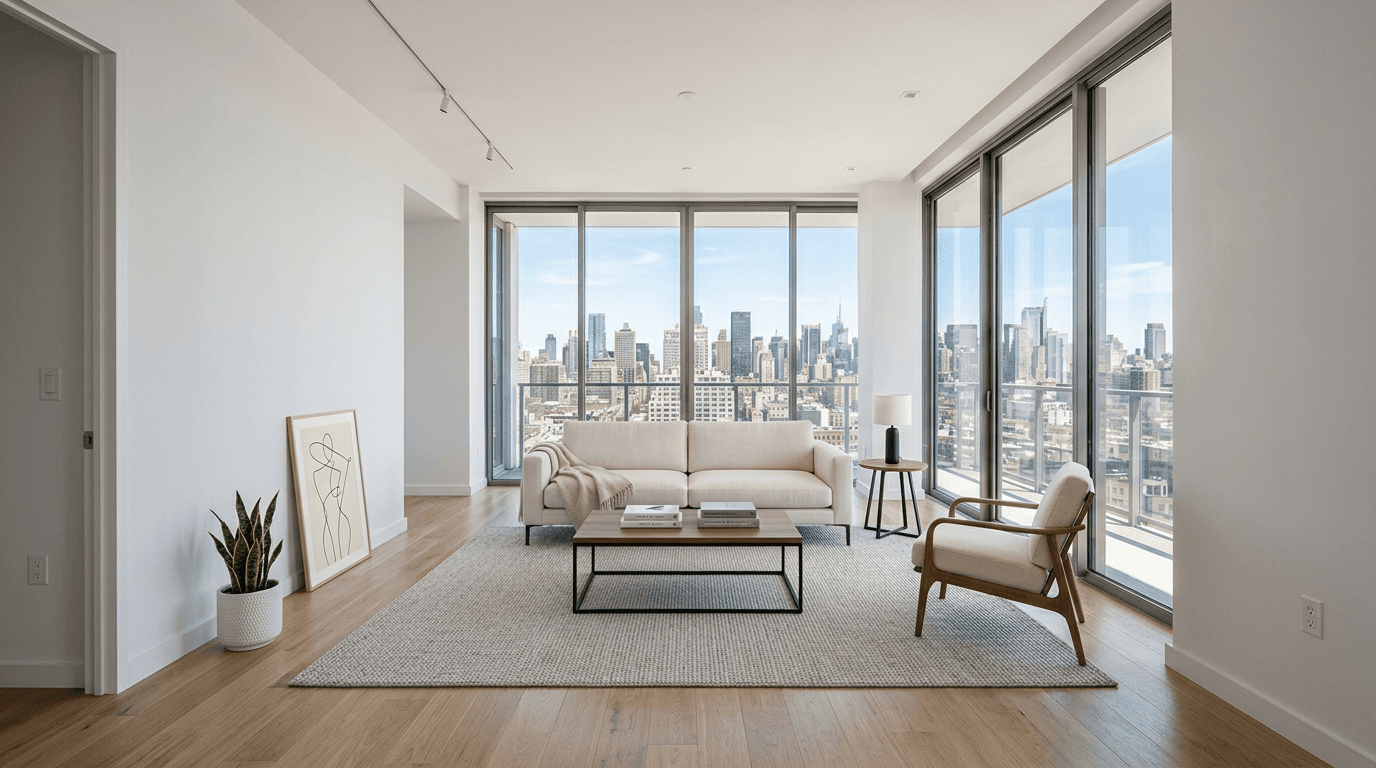
In the Airbnb and short-term rental world, booking decisions are often made in seconds, not minutes. Guests scroll fast, compare dozens of properties in the same market, and frequently decide whether to click based on a thumbnail, a hero image, and whether the space feels immediately useful for their trip. That creates a painful reality for hosts: an empty or poorly styled unit can underperform long before a guest ever reads your amenities, house rules, or reviews. For individual hosts and STR managers trying to raise off-season occupancy, stand out in crowded search results, or launch a new unit before they can afford a designer, virtual staging has become one of the most practical merchandising tools available. It allows you to show a living room as conversation-friendly, a bedroom as calming and premium, or a nook as a work-from-anywhere setup without physically purchasing furniture before demand is proven. This matters because the National Association of Realtors has repeatedly reported that staging helps buyers visualize a property as a future home, and the same psychology applies to travelers deciding whether a space fits a weekend getaway, family stay, or remote-work retreat. For Airbnb and STR hosts, virtual staging is not about decoration for decoration’s sake; it is about improving click-through, helping guests instantly understand use cases, and positioning a listing to compete more effectively in both peak and shoulder seasons.
According to recent staging metrics by the National Association of Realtors (NAR), professionally staged properties can significantly increase sales speed and perceived value, accelerating the impact for your specific niche.
Start with the search-result battle: stage for the thumbnail, not just the full gallery
Airbnb and STR hosts often make the same mistake when they think about listing photos: they focus on whether the full gallery looks decent rather than whether the first one or two images can win the search-result battle. On most booking platforms, your property is not initially competing on square footage, nuanced amenity details, or your excellent communication style. It is competing as a tiny visual tile surrounded by alternatives that may have brighter styling, clearer room purpose, or a more emotionally resonant first impression. Virtual staging is especially powerful here because it lets you design the visual hierarchy of the room for the exact environment where booking discovery happens. A vacant living room with plain walls and no focal point often reads as smaller, colder, and less premium in a thumbnail than the exact same room shown with a scaled sofa, warm textiles, accent lighting, and a coffee-table arrangement that implies comfort and social use. For off-season bookings, this becomes even more important because travelers are often less destination-committed and more comparison-driven; they may be choosing between a staycation, a weekend road-trip rental, and a hotel. Your photos must therefore communicate not just space, but experience. A virtual stage should help the eye immediately understand what kind of stay your property enables: cozy winter weekend, family board-game night, couples escape, ski-base convenience, beachy reset, or work-from-anywhere productivity. If your first image does not answer that quickly, you are relying too heavily on captions and descriptions that many guests will never read unless the photo already earned the click. Effective hosts review their category competitors, identify the visual patterns dominating page-one style results in their market, and use virtual staging to create a thumbnail that feels credible, bright, and instantly legible at small size.
Action Step
Audit your current first five listing photos at thumbnail size and identify one room that needs virtual staging to improve immediate click appeal.
Match the staging concept to the guest persona you actually want to attract
The most successful Airbnb and STR virtual staging projects begin with revenue strategy, not aesthetics. Hosts frequently ask what style looks best, but the better question is what style helps the right guest self-select into your listing. A downtown one-bedroom near a convention center should not be staged the same way as a mountain cabin, suburban family home near a sports complex, or compact beach condo aimed at couples. Virtual staging gives you the chance to merchandise the space around your highest-value guest persona without committing capital to full physical furnishing changes before you test demand. This is especially useful if you are launching a new listing, repositioning after weak off-season performance, or trying to broaden appeal beyond your current booking mix. For example, if you want longer midweek stays, staging a corner with a tasteful desk, ergonomic chair, layered lighting, and visible charging access can signal remote-work readiness in a way generic vacant photos never will. If you want more family bookings, a dining area staged for shared meals and a bunk room presented with coordinated but uncluttered bedding can help parents quickly picture the trip logistics. If your goal is romance and premium ADR, a bedroom image with polished symmetry, soft textures, and restrained decor can elevate perceived quality far more effectively than an empty room. Research from the Harvard Joint Center for Housing Studies has documented the continued importance of rental affordability pressure and shifting housing choices, while U.S. Census Bureau data continue to show the scale and diversity of rental households; in practice, that means hosts are serving increasingly segmented traveler needs and should merchandise listings accordingly. A property that visually speaks to everyone often converts no one especially well. The point of virtual staging is not to decorate for broad approval but to make the intended use case unmistakable and aspirational for the exact guest segments most likely to book your dates at profitable rates.
Action Step
Define your top two booking personas for the next 6-12 months and choose staging themes that make those stays obvious in photos.
Use virtual staging to solve vacancy perception and make room function unmistakable
One of the biggest hidden conversion problems in short-term rental listings is ambiguity. When guests cannot immediately tell how a room functions, they often assume the worst: that the living room is too small, the second bedroom is awkward, the dining area is unusable, or the bonus space has no practical value. Empty rooms tend to photograph with that exact kind of ambiguity because scale is harder to read without furniture and because guests are not naturally trained to interpret blank interiors the way hosts and real estate professionals are. The National Association of Realtors has long found that staged homes make it easier for people to visualize a property; for STR hosts, the equivalent is helping travelers imagine not ownership, but usability during a specific trip. Virtual staging is therefore at its best when it removes uncertainty. A long, narrow room can become clearly legible as a lounge with a sofa and reading chair instead of an awkward leftover corridor. A spare bedroom can become a queen guest room, a twin setup for children, or a compact office depending on your target market. A covered patio can be presented as a morning coffee zone rather than dead square footage. This matters because travel buyers evaluate listings through practical questions: Where will we eat? Where will we sit together? Can I work privately? Is there enough surface area for luggage? Empty rooms force the guest to answer those questions themselves, and many simply move on to listings that make the answers effortless. Virtual staging also helps preserve credibility when you are not yet ready to invest in full furnishings, whether due to launch budgets, owner approval timelines, or testing a unit’s demand before larger capex decisions. The key is to stage for accurate possibilities, not fantasy. If the room cannot realistically fit a king bed with side tables and circulation space, do not use that rendering. Honest virtual staging builds trust by clarifying potential; misleading virtual staging erodes trust the moment a guest arrives and perceives a mismatch. In STR, where reviews compound performance over time, clarity is far more valuable than exaggeration.
Action Step
Identify every room in your listing that guests might misread and assign each one a single, unmistakable purpose for virtual staging.
Design for seasonal revenue swings so your listing feels bookable year-round
For many Airbnb and STR hosts, the true value of virtual staging appears during shoulder and off-season periods, when the market gets less forgiving and your listing can no longer coast on destination demand alone. In peak season, a decent property in a desirable market may still receive strong interest because travelers are committed to the location and inventory is constrained. In slower months, however, guests become more selective and compare listings based on emotional warmth, versatility, and whether the property seems worth the trip in less-than-ideal weather or lower-demand periods. Virtual staging lets you reposition the same unit to feel seasonally relevant without physically redoing the space every quarter. A mountain rental can emphasize layered textures, throws, warm wood tones, and a fireside conversation area in winter-oriented imagery, while still maintaining a clean, evergreen design language. A beach rental can use lighter palettes, casual dining cues, and indoor-outdoor seating emphasis when preparing spring and summer refreshes. An urban rental can show a more polished remote-work setup and cozy evening ambiance to support weekday winter demand. This type of merchandising matters because many hosts struggling with occupancy are not actually suffering from poor product-market fit all year; they are suffering from imagery that only sells one season of use. Industry travel research from organizations such as U.S. Travel consistently points to the importance of leisure travel resilience, but resilience does not mean every listing performs equally well in every month. Hosts need visual narratives that answer the seasonal question in the guest’s mind: why should I stay here now? Virtual staging can help you create that answer by making the property feel aligned with the emotional and practical needs of the current booking window. The best strategy is not to overproduce multiple deceptive versions of the same room, but to select a flexible, realistic base style and update hero images or room emphasis as demand shifts. This gives you a cost-efficient way to support year-round merchandising without repeatedly hiring physical stagers or undertaking expensive seasonal redesigns.
Action Step
Create one primary staging direction and one seasonal variation that makes your property feel compelling during your slowest booking period.
Keep the visuals aspirational but defensible so reviews and guest trust stay intact
Virtual staging can improve performance, but for Airbnb and STR hosts the margin for error is narrower than in traditional real estate marketing because your audience is not just deciding whether to inquire; they are deciding whether to book a stay they will later evaluate in a public review. That means every virtually staged image should be aspirational yet defensible. The room should feel polished, attractive, and emotionally inviting, but it must also remain faithful to the room’s true dimensions, layout, light direction, architectural features, and likely furniture capacity. In short-term rentals, trust is operationally valuable. A guest who feels the listing photos overstated the property is more likely to mention it in a review, less likely to forgive minor issues, and more likely to request concessions. The Federal Trade Commission’s truth-in-advertising principles are a useful common-sense guide here even when not addressing a specific platform image policy: marketing claims should not mislead reasonable consumers. Applied to virtual staging, that means avoiding furniture at impossible scale, fake views, nonexistent amenities, altered window placement, edited-out flaws that materially affect the stay, or design cues that imply features you do not provide. If the breakfast nook is virtually staged as a laptop-friendly workspace, make sure the real space can support that use and provide the power access and seating comfort to match. If the patio is staged for dining, make sure guests are not arriving to find an unusable slab with no corresponding setup plan. Many hosts can avoid backlash by being transparent in captions or listing notes when some images are virtually staged to illustrate furnishing potential during launch or renovation. Transparency does not weaken conversion when the images are credible; in fact, it often strengthens confidence by signaling professionalism. The objective is to help guests understand the experience you are creating, not to close the booking with visual sleight of hand. In a review-driven marketplace, long-term profitability comes from alignment between promise and reality.
Action Step
Review every planned staged image and remove anything that exaggerates room size, amenities, views, or functionality beyond what a guest will actually experience.
Integrate staged images into a listing launch and testing system, not a one-time design exercise
The highest-performing hosts do not treat virtual staging as a single creative project; they use it as part of an iterative listing optimization system. Once your staged photos are ready, their job is not finished when they are uploaded. You need to test whether the new imagery improves the business metrics that matter: search-result clicks, listing saves, inquiry quality, conversion rate, booking window, and off-season occupancy. Start by deciding which staged room should be the hero image and which should appear next to establish flow. In most STR listings, the hero image should either showcase the room that best sells the trip experience or the room most likely to differentiate you in search, not necessarily the most expensive room to furnish. Then monitor performance for a meaningful period, comparing booking behavior against prior weeks or prior comparable inventory where possible. If you manage multiple properties, this becomes easier because patterns emerge across unit types, locations, and guest segments. You may find, for example, that a more clearly staged dining-and-lounge area improves family bookings, while a staged work corner improves midweek occupancy in urban markets. You may also discover that one hero image earns clicks but not conversions, which can signal a mismatch between thumbnail promise and full listing experience. In that case, the answer is not always more staging; it may be reordering images, rewriting the lead description, or adjusting pricing so the visual impression and value proposition align. This testing mindset is particularly important for hosts with limited design budgets because virtual staging should be measured against business outcomes, not just aesthetic satisfaction. A strong image set can help a new listing launch faster, validate demand before furnishing decisions are finalized, and support more confident reinvestment into physical upgrades later. When used this way, virtual staging becomes a revenue intelligence tool as much as a visual marketing tool. The hosts who benefit most are those who pair better imagery with disciplined merchandising, honest listing copy, and regular performance review rather than assuming the images alone will solve every occupancy challenge.
Action Step
Upload staged photos in a deliberate order, track booking and click performance for at least 2-4 weeks, and revise based on results rather than personal preference.
Explore More Resources
Conclusion
For Airbnb and STR hosts in 2026, virtual staging is no longer just a cosmetic real estate tactic; it is a practical merchandising strategy for earning clicks, clarifying room purpose, accelerating listing launches, and supporting occupancy during slower seasons. When used well, it helps travelers instantly understand what kind of stay your property offers and whether it fits their trip. The most effective approach is to stage for the search-result thumbnail, align the visuals with your highest-value guest personas, remove ambiguity around room function, adapt the emotional tone for seasonal demand, and stay rigorously honest so guest trust and reviews remain strong. Above all, treat virtual staging as part of a broader optimization system rather than a decorative afterthought. The hosts who win with it are the ones who combine compelling visuals with realistic expectations, smart positioning, and ongoing performance testing.
Ready to Stage Your First Room?
Join thousands of top real estate professionals who use AI Virtual Staging to instantly transform vacant photos into fully-furnished masterpieces in under 20 seconds.
Start Staging For FreeFrequently Asked Questions
Does virtual staging actually help an Airbnb listing get more bookings?
It can help when the current photos are empty, unclear, or visually weak in search results. Virtual staging improves the guest’s ability to understand room function and imagine the stay, which can increase clicks and strengthen conversion when the rest of the listing, pricing, and amenities are competitive. It is most effective when it improves the first-image impression and makes the space feel purposeful rather than vacant or confusing.
Is it okay to use virtual staging on a short-term rental listing if the property is not fully furnished yet?
Yes, but only if you use it responsibly. For launch-phase STR listings, virtual staging can show furnishing intent before the final setup is complete. The important part is transparency and realism. The images should accurately represent room size, layout, and likely use, and your listing copy should make clear if some images illustrate intended furnishing style or setup. Misleading guests about what will actually be present at check-in can damage reviews and trust.
What rooms should Airbnb hosts prioritize first for virtual staging?
Start with the rooms that most influence thumbnail appeal and booking confidence: usually the living room, primary bedroom, and any ambiguous flex space. For STR listings, these rooms do the most work in helping guests decide whether the home feels comfortable, premium, and functional for their trip. If you target remote workers, a workspace image may also deserve priority. If you target families, dining and bunk spaces may matter more.
Can virtual staging help with off-season occupancy for vacation rentals?
Yes. Off-season demand often depends more heavily on emotional appeal and perceived value than peak-season demand. Virtual staging can make a property feel warmer, cozier, or more versatile during slower months by emphasizing the exact experiences guests still want in that season, such as fireside lounging, work-from-anywhere comfort, or indoor gathering space. It does not replace pricing strategy, but it can make your listing more compelling when travelers are comparing many options.
Will guests be upset if the home does not look exactly like the virtually staged photos?
They can be if the images exaggerate what the property offers. Guests usually respond well when the photos are clearly realistic and the actual setup delivers the same level of comfort and function. Problems arise when staging makes rooms look larger than they are, implies amenities that do not exist, or presents a design standard the guest will not receive. The safest approach is to use virtual staging to clarify and enhance, not to invent.
How often should a short-term rental host update virtually staged images?
Update them whenever your positioning changes materially, such as a rebrand, target-guest shift, renovation, major furnishing change, or repeated weak performance in a specific season. Many hosts do not need constant redesigns, but they do benefit from reviewing whether the hero image and first several gallery photos still match market demand. If your occupancy weakens during the same period each year, consider a seasonal image refresh rather than assuming the problem is only price-related.
Explore More Guides
Continue building your real estate expertise.
The Step-by-Step Guide to Virtual Staging for Equine Property Brokers
An authoritative 2026 step-by-step guide for equine property brokers on using virtual staging to market horse farms, equestrian estates, training facilities, and ranch properties with interiors that support premium rural lifestyle positioning and equestrian identity.
The Step-by-Step Guide to Virtual Staging for Student Housing Property Managers
An authoritative step-by-step guide for student housing property managers on using virtual staging to lease faster, refresh repetitive floor plans, and market effectively to both students and parents in 2026.
The Step-by-Step Guide to Virtual Staging for Self-Storage Facility Conversion Developers
An authoritative 2026 step-by-step guide for self-storage facility conversion developers on using virtual staging to visualize adaptive reuse projects, win approvals, secure investors and lenders, and lease ancillary office or retail frontage.
The Step-by-Step Guide to Virtual Staging for Mid-Century Modern E-Designers
An authoritative 2026 step-by-step guide for mid-century modern e-designers on using virtual staging to create visually precise client presentations, communicate design intent remotely, and win more residential projects with compelling imagery.
The Step-by-Step Guide to Virtual Staging for Fraternity and Sorority House Property Owners
An authoritative 2026 step-by-step guide for fraternity and sorority house property owners on using virtual staging to improve recruitment, leasing, and marketing results with polished, realistic visuals.
The Step-by-Step Guide to Virtual Staging for Green Home Certification-Focused Realtors
An authoritative 2026 step-by-step guide for green home certification-focused realtors on using virtual staging to market LEED, Passive House, net-zero, and energy-efficient homes with visuals that make sustainability feel tangible, aspirational, and buyer-friendly.